Reading challenges

Collapse
X
 
  • Time
  • Show
Clear All
new posts
  • Mujin
    Member
    • Jul 2023
    • 137

    Reading challenges

    Hello everyone,

    I just wanted to share something, perhaps others have experienced this as well. I have read sutras, and am now reading Shobogenzo. To me, it's like reading Shakespeare. I feel I'm not up to the task, and I get frustrated with myself. It is all so far over my head. In the past, I was able to read such things as the Stoics, and Aristotle, and the like, without much issue. I'm at a bit of a loss with these writings.

    Gassho,

    Mujin

    SatTodayLAH
  • spinnylights
    Member
    • Jun 2025
    • 3

    #2
    Any particular passages you're finding challenging? Maybe just one to start with? I can't really help much with anything in Sanskrit, but at least where Dogen is concerned, I know from experience that sometimes it helps to clarify matters to look at his original Middle Japanese writing. I know Song Dynasty Chinese way less well than Middle Japanese, but there have also been some passages in the Blue Cliff Record that were really obscure to me in the English translation I've been reading that I found way easier to understand looking at the original text, just with a bit of beginner's grammar knowledge and a good dictionary. Translation is hard, and what made sense to the translator might not fit into your own mental models as effectively. Not to say that anything of this approach will necessarily help you, but even if not, other people in this community are way more knowledgeable than I am, doubtless, and all working together I'm sure we can help. It's probably also worth noting that there's not necessarily "one true way" to interpret these kinds of texts; people have debated for centuries over the right ways to interpret them, and that's a lively discussion we can all carry on, you included.

    Comment

    • Bion
      Senior Priest-in-Training
      • Aug 2020
      • 6968

      #3
      Originally posted by Mujin
      Hello everyone,

      I just wanted to share something, perhaps others have experienced this as well. I have read sutras, and am now reading Shobogenzo. To me, it's like reading Shakespeare. I feel I'm not up to the task, and I get frustrated with myself. It is all so far over my head. In the past, I was able to read such things as the Stoics, and Aristotle, and the like, without much issue. I'm at a bit of a loss with these writings.

      Gassho,

      Mujin

      SatTodayLAH
      You are not alone. Some translations are easier to read than others, but ultimately, Dogen Zenji's writing is challenging.
      What translation are you using?

      gassho
      sat lah
      "One uninvolved has nothing embraced or rejected, has sloughed off every view right here - every one."

      Comment

      • Shujin
        Novice Priest-in-Training
        • Feb 2010
        • 1486

        #4
        Originally posted by Mujin
        In the past, I was able to read such things as the Stoics, and Aristotle, and the like, without much issue.
        I think this is due, at least in part, to the fact that we have a cultural and historical background in Greek and Latin classics. I find Dogen much easier to read after laying a foundation in Buddhist history, sutras, and koan study. When I could see that Dogen's source material wasn't abstract or random, it helped me to get a handle on what he's trying to say. Jundo and Nishijima Roshi also have helpful approaches to reading Dogen. Jundo may chime in, but you'll have to look to Nishijima's books for guidance.

        Gassho,
        Shujin
        st/lah

        Kyōdō Shujin 教道 守仁

        Comment

        • Jundo
          Treeleaf Founder and Priest
          • Apr 2006
          • 44308

          #5
          I actually wrote a book on "how to read Dogen."

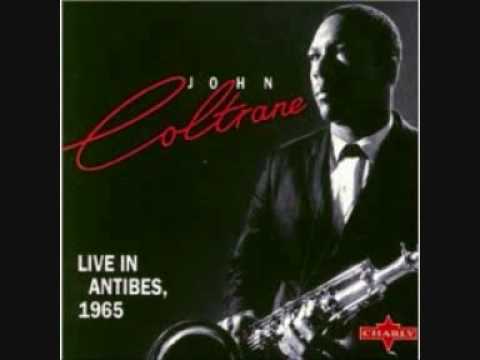
          Here is the thing: It is not to be read mostly (in his wilder stuff) as straight discourse, but more like jazz music riffing wildly on a standard tune, or Picasso taking a table apart and putting it back again. I have a short version of the explanation here:

          ~~~

          Really gettin' DOGEN'S WILD SOUND is a lot like gettin' THIS WILD SOUND ...

          (Please give a listen, and keep it playing while you read the rest of this post)
          .
          I've described Dogen as a JHANA JAZZ MAN-POET, riffing and free expressing-reexpressing-bending-straightening-unbinding-releasing the 'standard tunes' of the Sutras and Koans. The untrained ear can't make head or tail of it, complex rhythms, notes flying, wild tempo ...

          Above is what John Coltrane did-undid-diddled-redid, for example, with "MY FAVORITE THINGS", that really "squaresville" (though lovely in its own way) tune that you may recall being chirped by Julie Andrews in THE SOUND OF MUSIC (a great story)! For that reason, a familiarity with the original 'standards' of the American songbook helps a lot in getting where Coltrane was coming from and going to here. Likewise, a good grounding in traditional Buddhist, Mahayana and Zen philosophy and perspectives is vital to getting what Dogen is up to. But Dogen, Master of the WordJazz expression of the Wordless, then takes off bending and re-enlivening those "standard tunes" in ways felt in the skin, flesh, bones, and marrow. Dogen, for example, frequently re-wild-ed and bent up passages from the already wild and bent Lotus Sutra into something even more bent-iferous and wildacios! Sometimes with Dogen, one can make out clearly the "original melody" he is working with ... a Sutra passage, a Poem, an Old Koan ... and sometimes barely so, for it is not always the "point" he is trying to make through reasoned words, but "the sound, man, the feeling of the music". Dogen and Coltrane make their own musical expression the same but different from the 'standards' that the playful playing is playing upon ... expressing Timeless Old Truths in ways never expressed before ... making Timeless New Truths in the process ... but one also should not forget that that "standard" tune is in there too, and keeps popping up as the theme

          The Shobogenzo, for example, is a rather thick and thorny maze to most readers. But once Dogen's basic ways of expression are understood, one can read the entirety with a bit more ease ... though never easy, mind you, as Dogen (like Coltrane) may often have sometimes let the notes and feeling lead him where they would, and may not have been always himself quite sure where the music was taking him -- or what he himself "meant"! Nonetheless, each certainly knew what he "meant" cause of the meaning of the feelings felt!

          ~~~~

          Longer version here, with examples ...

          LONG POST A few excerpts for some tips and hints I've posted from time to time for those who want to dip into a bit of Shobogenzo ... ---- In my own "in a nutshell" description of how to approach Shobogenzo ... I often describe Dogen as a Jazzman, bending and re-livening the "standard tunes" of Zen


          Oh, and my book, by the way ...


          Gassho, J
          stlah
          ALL OF LIFE IS OUR TEMPLE

          Comment

          • Jundo
            Treeleaf Founder and Priest
            • Apr 2006
            • 44308

            #6
            I give this example of Dogen's game in my book ...

            ~~~~

            Dogen, for example, frequently wilded and re-wilded passages from the already fantastically wild “Lotus Sutra” into something even more wild-tastical! In one such example, he worked from a famous scene of that Sutra in which a stupa (a traditional pavilion or tower containing the ashes or other relics and treasures of a Buddha or other great Ancestor), in this case thousands of kilometers tall, appears from the ground and rests in the air. Buddha Shakyamuni sees that another Buddha (named Abundant Treasures) is sitting inside, and the two Buddhas share a seat within the tower and preach together. All this is depicted in the Sutra as occurring in the sky over Vulture Peak, the sacred site in India said to be where the Lotus Sutra was being preached (a preaching of the Sutra that amazingly includes, in a logical loop, this very scene of the Sutra being preached). It is already a pretty wild vision before Dogen even sets to work on it. The Lotus Sutra describes the sacred happening like this:

            At that time, before the Buddha, a Stupa of the Seven Treasures [gold, silver, pearl, etc.], five hundred yojanas in height, and two hundred and fifty yojanas in length and breadth, sprang out from the earth and abode in the sky… When that Buddha [Abundant Treasures] was practicing the Bodhisattva way in the past, he had made a great vow: “After I have realized [the state of] Buddha and died, if in the lands of the ten directions there is any place where the Lotus Sutra is preached, my Stupa shall spring up and appear before that place so that I may hear the Sutra.”

            In a Shobogenzo essay called Hokke-Ten-Hokke (“The Flower of Dharma Turns the Flower of Dharma”), Dogen takes this scene, flips it around, stirs it up, and brings it home to his fans. The expression “turning the flower of Dharma” can mean a Buddha’s preaching of the Dharma, the Buddhist Truth, and it also can mean that the whole beautiful universe is like a flower turning. At the end, the reference to “non-thinking” (hi-shiryo) is the same one that Dogen often employs to describe the state of mind in Zazen which is “thinking-not-thinking” that is “non-thinking”:

            [Dogen says:] There is turning the Flower of Dharma in the presence “before the Buddha” of a “Treasure Stupa,” whose “height is five hundred yojanas.” There is turning the Flower of Dharma in the “Buddha sitting inside the Stupa,” whose extent is “two hundred and fifty yojanas.” There is turning the Flower of Dharma in springing out from the earth and abiding in the earth, [in which state] mind is without restriction and matter is without restriction. There is turning the Flower of Dharma in springing out from the sky and abiding in the earth, which is restricted by the eyes and restricted by the body. Vulture Peak exists inside the Stupa, and the Treasure Stupa exists on Vulture Peak. The Treasure Stupa is a Treasure Stupa in space, and space makes space for the Treasure Stupa. The eternal Buddha inside the Stupa takes his seat alongside the Buddha of Vulture Peak, and the Buddha of Vulture Peak experiences the state of experience as the Buddha inside the stupa. When the Buddha of Vulture Peak enters the state of experience inside the Stupa, while object and subject on Vulture Peak [remain] just as they are, he enters into the turning of the Flower of Dharma. […] “Inside the stupa,” “before the Buddha,” “the Treasure Stupa,” and “space” are not of Vulture Peak; they are not of the world of Dharma; they are not a halfway stage; and they are not of the whole world. Nor are they concerned with only a “concrete place in the Dharma.” They are simply “non-thinking.” (based upon the Nishijima-Cross translation)

            The sacred, all so thoroughly interconnected and inter-flowing, every bit pouring in and out of every bit, is the turning of the flower of the Buddha’s teaching, the whole universe turning, sometimes experienced in the world of restrictions and sometimes unrestricted, which is all the “non-thinking” of Zazen!

            Dig it!

            .​​
            ALL OF LIFE IS OUR TEMPLE

            Comment

            • Mujin
              Member
              • Jul 2023
              • 137

              #7
              Originally posted by Bion

              You are not alone. Some translations are easier to read than others, but ultimately, Dogen Zenji's writing is challenging.
              What translation are you using?

              gassho
              sat lah
              I am reading the Nishijima/Cross translation

              Comment

              • Bion
                Senior Priest-in-Training
                • Aug 2020
                • 6968

                #8
                Originally posted by Mujin

                I am reading the Nishijima/Cross translation
                Sometimes, comparing different translations can help quite a bit, as you can get clarity on certain words and expressions. You may want to try looking at the Tanahashi translations, too. Maybe the Soto Zen Text Project one, if you have access to it. For me, that's useful, and I rely on this approach always.

                gassho
                sat lah
                "One uninvolved has nothing embraced or rejected, has sloughed off every view right here - every one."

                Comment

                Working...