If this is your first visit, be sure to
check out the FAQ by clicking the
link above. You may have to register
before you can post: click the register link above to proceed. To start viewing messages,
select the forum that you want to visit from the selection below.
Dear fellow Treeleafers,
what need I to take care of when going for one, how many bowls, what else to look for ?
This question also goes to Jundo and Taigu in case there are any differences in the lineages,
Thank you & Gassho
Myoku
Dear fellow Treeleafers,
what need I to take care of when going for one, how many bowls, what else to look for ?
This question also goes to Jundo and Taigu in case there are any differences in the lineages,
Thank you & Gassho
Myoku
Thanks for asking this question Myoku, I too would be interested in this as well.
The number of bowls etc is a bit different from Rinzai to Soto etc but also you may only need 4 bowls or 3 bowls depending on whats being served and when (and some places may offer a quick how to oryoki before hand).
Yes, it depends what you want to use it for, and how "official" one wishes to be. Do you want a full Soto set sufficient for you to begin practicing at Eiheiji Monastery? That would set a dent in the bank account too (equivalent to maybe US$700 or so for real lacquer, not plastic or the like) ... The following page is in Japanese, but the photos show all the pieces in the Soto array ... Have a look scrolling down here ...
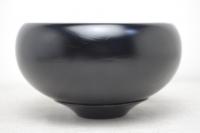
One point is the the "Buddha Bowl" (the large bowl) has a fully rounded bottom according to tradition ...
... requiring it to rest on a small plate-like stand to sit flat ...
Rinzai sets are a little different in shape and configuration.
To make a long story short, most of the "Oryoki Sets" one would buy online would be different in many ways from all the above ... made of some resilient artificial material, with less bowls, no "round bottom" on the main bowl, not quite "Rinzai" or "Soto" or very any tradition in bowl shape, no "water board" or lacquer "placemat" ... even maybe a fork in place of chopsticks! ... etc. etc. However, most would be fine for basic Practice, skipping a few steps (such as unfolding and placing the "placemat" if not included).
Here, by the way, are Oryoki Instructions from Soto-shu. It is a lovely Practice, in which body-mind is dropped away in the flow of dozens of ballet like movements ... like a dance.
We will Practice an abbreviated form of Oryoki, using a "homemade" Oryoki kit from items around the kitchen, for our Treeleaf 2-Day Rohatsu Retreat in December. Stay tuned for details!
We process personal data about users of our site, through the use of cookies and other technologies, to deliver our services, personalize advertising, and to analyze site activity. We may share certain information about our users with our advertising and analytics partners. For additional details, refer to our Privacy Policy.
By clicking "I AGREE" below, you agree to our Privacy Policy and our personal data processing and cookie practices as described therein. You also acknowledge that this forum may be hosted outside your country and you consent to the collection, storage, and processing of your data in the country where this forum is hosted.
Comment