Why chant? Explanation for Beginners

Collapse
X
 
  • Time
  • Show
Clear All
new posts
  • Douglas
    Member
    • May 2017
    • 123

    Why chant? Explanation for Beginners

    Chanting is something that has always intrigued me because I never quite understood it. Why do Buddhists chant? What purpose does it serve?

    I was reading Norman Fischer's book *Training in Compassion: Zen Teachings on the Practice of Lojong*, and it seems to make more sense to me now. Have we ever had a Treeleaf discussion or podcast about chanting and why it is done, other than for tradition, of course? If so, and someone could point me to it, I’d be grateful.

    For outsiders who are not familiar with Zen and Buddhism, it is probably the weirdest or most striking thing: people chanting strange words like *Tathagata*, in odd tones, etc.

    Gassho, Doug
    SAT/LAH

  • Bion
    Senior Priest-in-Training
    • Aug 2020
    • 6957

    #2
    Chanting is a good way to remind oneself of the teachings; it is also a way of mindfully practicing, as we focus just on chanting, the resonance of the voice, and the slow, steady breathing. In chanting, we also maintain the connection with the tradition, our ancestors, and everyone currently practicing. We chant and then dedicate the merit of the chanting in order to train in compassion, generosity, and kindness as well. Chanting was a way of making sure the teachings are remembered and passed down accurately. We still honor that.

    gassho
    sat lah
    "One uninvolved has nothing embraced or rejected, has sloughed off every view right here - every one."

    Comment

    • Douglas
      Member
      • May 2017
      • 123

      #3
      Originally posted by Bion
      Chanting is a good way to remind oneself of the teachings; it is also a way of mindfully practicing, as we focus just on chanting, the resonance of the voice, and the slow, steady breathing. In chanting, we also maintain the connection with the tradition, our ancestors, and everyone currently practicing. We chant and then dedicate the merit of the chanting in order to train in compassion, generosity, and kindness as well. Chanting was a way of making sure the teachings are remembered and passed down accurately. We still honor that.

      gassho
      sat lah
      Thank you Bion! This is a great and easy explanation that I can use to explain to others.

      How do you think (if any) Zen flavor's its chants differently than other Buddhist traditions? Or does your explanation cover pretty much all Buddhist traditions?

      Gassho, Doug
      sat/lah

      Comment

      • Jundo
        Treeleaf Founder and Priest
        • Apr 2006
        • 44285

        #4
        I am very down to earth about chanting, and find no special power in the chants as incantations, summoning spirits, bringing rain or good fortune in business, good health (except for the effect on body, breath and heart of chanting itself) or the like. No abracadabra for me.

        I do not think that chanting for our deceased Grandpa will necessarily help him to a better rebirth (maybe it will), but it know that it will help ease the heart of the grieving listeners and chanters who miss their Grandpa.

        It is music, dance, and one can lose oneself in the music and motion, a kind of ancient "rave," all to find one's Vast Self in the sound and vibrations.

        It is also, as Bion reminds us, a way to recall the teachings, but with the body. For example, we study the meaning of the Heart Sutra about Emptiness ... but then we put down the intellectualizing and just dance and sing the Heart Sutra, becoming and embodying Emptiness. The chants also remind us of our Vows, such as The Verse of Atonement and Four Vows, and our good wishes for others, such as the Metta Verses.

        There is something musical about chanting, hypnotic to the beat, like any song. There is also movement involved quite often, and a hypnotic beat. Yes, a Buddhist Ceremony is basically a rave! In music and dance, we put down the meaning, and pour ourself into the sound and rhythm. We feel the meaning of the Heart Sutra, and the music of the Verses of Atonement and Metta are meant to sink into our bones.
        It is also a lovely connection to our traditions that, like incense and bells, robes and beads, reminds us of the sacredness of this place and moment. Truly, every place and moment is special and sacred, but it is good to be reminded sometimes.

        That is why we chant.

        Gassho, Jundo
        stlah
        ALL OF LIFE IS OUR TEMPLE

        Comment

        • Hokuu
          Member
          • Apr 2023
          • 205

          #5
          IMHO it's just cool, and I love it

          On a more serious note, I guess one can find a connection between modern chanting traditions (be it Buddhist, Eastern Orthodox, etc.) and verses as rhythmically structured speech and much culturally older shamanic traditions. It's about physicality, corporality, and trance-like states, I guess. I read somewhere that prolonged singing of Georgian chorales actually made people enter altered states of consciousness due to the long cycles of exhales and short inhales.

          gassho
          satlah
          歩空​ (Hokuu)
          歩 = Walk / 空 = Sky (or Emptiness)
          "Moving through life with the freedom of walking through open sky"

          Comment

          • Bion
            Senior Priest-in-Training
            • Aug 2020
            • 6957

            #6
            Originally posted by Douglas


            How do you think (if any) Zen flavor's its chants differently than other Buddhist traditions? Or does your explanation cover pretty much all Buddhist traditions?

            Gassho, Doug
            sat/lah
            Glad it helped, Doug!

            I think chanting is a little adaptable to each lineage and tradition. Tibetans chant tibetan style, Chinese do Chinese style, Westerners sometimes come up with their own ways. I think those few things I mentioned apply to all traditions, and it is important to add the devotional aspect too. When I chant "I take refuge in the Buddha" I do in a devotional way, not only as a reminder of the teachings. That applies to all traditions, I believe.

            Gassho
            sat lah
            "One uninvolved has nothing embraced or rejected, has sloughed off every view right here - every one."

            Comment

            • Jundo
              Treeleaf Founder and Priest
              • Apr 2006
              • 44285

              #7
              Frankly, Japanese chants are very steady and monotone generally, compared to those on the Asian continent. You can hear that, for example, in the Heart Sutra ...

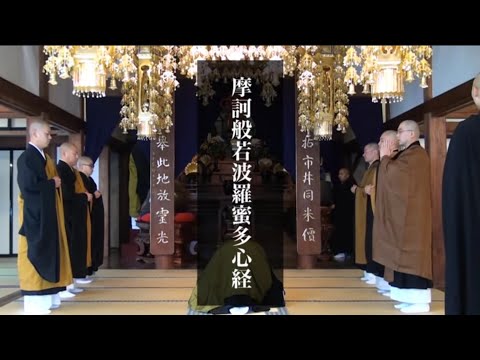
              Japanese ...


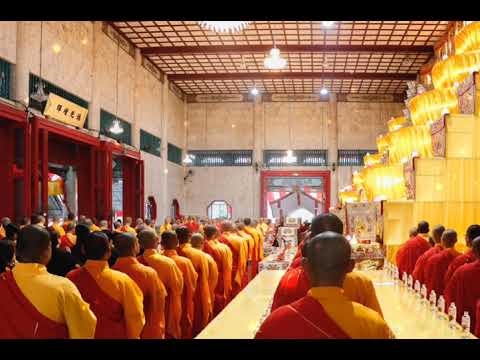
              Chinese ... much more melodic ...


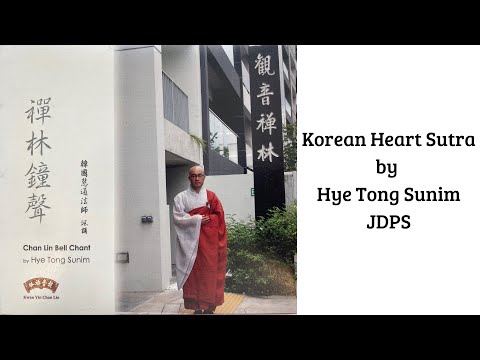
              Korean (my favorite) ...


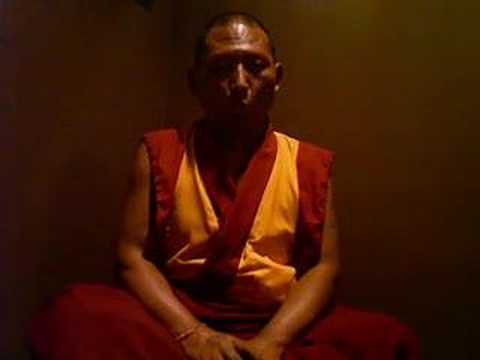
              Tibetan throat singing ...


              Gassho, J
              stlah
              Last edited by Jundo; 04-15-2026, 01:14 PM.
              ALL OF LIFE IS OUR TEMPLE

              Comment

              • Taiji
                Member
                • Jun 2025
                • 125

                #8
                For what it might be worth, my personal experience with chanting is that it helps to still the chattering of my mind. That always-on static in the back of my brain isn't so noticeable. Mostly for me at this place in my practice, it's the Heart Sutra in Japanese...though admittedly I've been lax lately.

                That said, I also have one chanting "guilty pleasure." I picked up the Bishamon mantra from a movie decades ago as a nerdy teenager, mostly because, in the way of nerdy teenagers, I thought it was super-mega cool, even if I had no real understanding of what it was. It still lives rent-free in my head and will bubble up from time to time. Whether or not Bishamon is a real entity who has any awareness or interest in what I'm saying or doing seems largely irrelevant. It has a grounding effect, so if it pops up, I'm inclined to spend a little time with it, even if that's only a few seconds.

                Gassho,
                Taiji
                Sat/LAH Today
                Taiji / 泰侍
                "Peaceful Samurai"

                Comment

                • Seikan
                  Member
                  • Apr 2020
                  • 1089

                  #9
                  Originally posted by Taiji
                  For what it might be worth, my personal experience with chanting is that it helps to still the chattering of my mind.
                  This!!!

                  For me, the simple act of chanting the robe verse before zazen is an effective way to transition into practice. And longer chants like the Heart Sutra and the Sandokai have an even greater effect at times. Plus the chanting itself, if done with the same mindset as zazen, is really just "chanting zazen", right?

                  Gassho,
                  Seikan
                  stlah
                  聖簡 Seikan (Sacred Simplicity)

                  "See and realize / that this world / is not permanent. / Neither late nor early flowers / will remain."
                  —Ryokan

                  Comment

                  • Shonin Risa Bear
                    Member
                    • Apr 2019
                    • 959

                    #10
                    Yeah, I'm always "what th' heck?" like I've caught my mouth cosplaying, but then we get going and I experience dissolving into the causes and conditions. Currently we're doing the sandokai at Manzoku-an morning service.

                    gassho, satlahchant, shonin
                    Visiting priest: use salt

                    Comment

                    • Onki
                      Novice Priest-in-Training
                      • Dec 2020
                      • 1272

                      #11
                      I think we chant to honour our ancestors and all of their teachings. We chant for all beings that are suffering. All chants tell us something about Reality. Chanting in itself is Zazen and practice.

                      Gasshō,

                      On

                      st/lh
                      “Let me respectfully remind you
                      Life and death are of supreme importance.
                      Time swiftly passes by
                      And opportunity ist lost.
                      Each of us should strive to awaken.
                      Awaken, take heed,
                      Do not squander your life.​“ - Life and Death and The Great Matter

                      Comment

                      • Tenryu
                        Member
                        • Sep 2025
                        • 241

                        #12
                        For me, chanting is just another form of practice. Not really separate from zazen, just using the voice instead of silence. When I chant the Takkesage, the Heart Sutra, the Four Vows, or the Verse of Atonement, it's basically the same thing as sitting: just being with the sound, the breath, the body, this moment. Nothing mystical required (at least for me). Just practice.

                        That said, there is a certain feeling of connection that comes up sometimes - like chanting together with all the Buddhas and Bodhisattvas across time. I don't worry too much about what that "means," but it's there and it feels quite natural. And then, like others have already pointed out, there are the very practical side effects: steady breathing, calming the nerves, giving the mind something simple to settle into. It’s a bit like the body knows what to do with it. Also… I just enjoy it.

                        Originally posted by Douglas
                        For outsiders who are not familiar with Zen and Buddhism, it is probably the weirdest or most striking thing: people chanting strange words like Tathagata, in odd tones, etc.
                        I'd say that depends a lot on what you're used to. Humans do this kind of thing everywhere — like Jundo said, it's not so different from song and dance.

                        Funny enough, I've been an honorary member of a witches' circle for years (long story ). I'm more of a science guy myself - no abracadabra for me either - but these are dear friends. And the overlap is kind of beautiful: in a couple of weeks we'll do a group ritual "for the benefit of all beings" (sound familiar?), sit zazen together, chant a mantra, and do mettā practice.

                        In the end, like zazen, chanting probably makes the most sense when you actually do it.

                        Gasshō,
                        Tenryū
                        sat+lah
                        恬流 - Tenryū - Calm Flow

                        Comment

                        • BrettVZ
                          Member
                          • Oct 2025
                          • 7

                          #13
                          To add my two cents: I think (on the more religious side of Zen) it is also a way Zen monks give back to the lay Sangha that supports them. The Sangha gives monks many important things and the only thing the monks can give in return is spiritual value and karma. Since the lay Sangha cannot chant and create good karma for themselves at home, the monks do it for them.

                          Chanting is essentially the monks generating surplus karma and then "donating" it to their lay Sangha. Hence, the universal transfer of merit we recite at the end.

                          Of course, those of us who don't subscribe much to the religion of Zen know better. But for the lay Sangha they probably see it that way and it gives them peace of mind. And that peace of mind is the real value the monks give.

                          Gassho
                          Brett
                          SatLAH

                          Comment

                          • Houzan
                            Member
                            • Dec 2022
                            • 704

                            #14
                            Thank you for bringing this up. Interesting to read. For me chanting is a nice tradition, like singing songs in church, but would rather spend the time sitting.

                            Gassho, Hōzan
                            satlah

                            Comment

                            • Hoshuku
                              Member
                              • May 2017
                              • 333

                              #15
                              Originally posted by Taiji
                              For what it might be worth, my personal experience with chanting is that it helps to still the chattering of my mind. That always-on static in the back of my brain isn't so noticeable. Mostly for me at this place in my practice, it's the Heart Sutra in Japanese...though admittedly I've been lax lately.

                              That said, I also have one chanting "guilty pleasure." I picked up the Bishamon mantra from a movie decades ago as a nerdy teenager, mostly because, in the way of nerdy teenagers, I thought it was super-mega cool, even if I had no real understanding of what it was. It still lives rent-free in my head and will bubble up from time to time. Whether or not Bishamon is a real entity who has any awareness or interest in what I'm saying or doing seems largely irrelevant. It has a grounding effect, so if it pops up, I'm inclined to spend a little time with it, even if that's only a few seconds.

                              Gassho,
                              Taiji
                              Sat/LAH Today
                              Totally agree with your general observation.

                              By Bishamonten Mantra do you mean this, 'On Beishiramandaya Sowaka'?

                              It seems to be recited to bring good fortune, business prosperity, and to repel evil, frequently used for praying for victory in competitions. Also, was chanted by famous samurai commanders to invoke victory before battle.

                              A new one on me but there are so many mantra.

                              Bows
                              Hoshuku
                              Satlah

                              Comment

                              Working...