Announcement: Special Zazenkai March 29th with Hōdo Gomoku

Collapse
X
 
  • Time
  • Show
Clear All
new posts
  • Jundo
    Treeleaf Founder and Priest
    • Apr 2006
    • 44391

    Announcement: Special Zazenkai March 29th with Hōdo Gomoku


    Dear All,

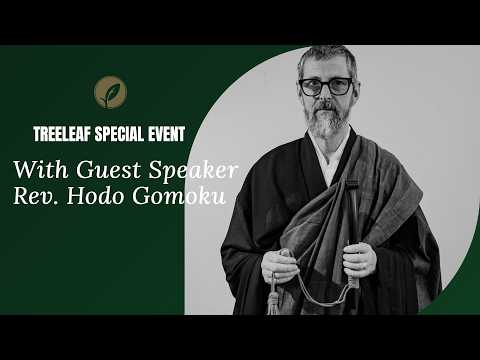
    A lovely teacher will be visiting Treeleaf for a special Talk and Sitting on Sunday, March 29th. It is also a "get to know our family" event, as Rev. Hōdo Gomoku happens to be my "Dharma Grand Grand Nephew" ... in the line of Nishijima, Chodo, Taigu and Myozan.) As well, the event honors St. Patty the Zen way ... Please come sit with us.

    Hōdo Gomoku is a Zen Buddhist priest and teacher, the Vice-Abbot of the Dublin Zen Centre, home to Zen Budhism Ireland, an Irish-based Buddhist sangha of practitioners in the Soto Zen tradition, belonging to the lineage of Nishijima Roshi. Zen Buddhism Ireland practices Soto Zen Buddhism with an emphasis on Shikantaza, ‘just sitting.' They also honour the traditional ritual forms of Zen practice, especially with a devotion to sewing the Okesa, the Buddha’s robe, the robe of Zazen.
    The Zazenkai will be at the following times on Sunday March 29th . ...

    The festivities will begin at 3pm in Dublin/11pm in Japan (that is New York 10am, Los Angeles 7am, London 3pm and Paris 4pm, all Sunday March 29th)]. Our sitting schedule will look like this ... a few minutes of Zazen, a Talk by Rev. Gomoku, and some Questions from our participants. I anticipate that the event will be about an hour to 90 minutes, depending on the Q&A.

    It will also be recorded for later viewing. You can join the event in the MEETING ROOM on Zoom LIVE with camera and microphone so that we can see and hear you (however, "one way" live sitters who do not wish to be seen or to speak are encouraged to come into the Zoom sitting, and just leave the camera and microphone turned off or not connect them) all at the following link: MEETING ROOM, password (if needed): dogen

    It can also be viewed "one way" at the time, or later, at the following screen:
    .
    There will be a Q&A after his talk, at which you can either ask a LIVE question, or email me a question before or during the event, which I will read (email your question to Jundotreeleaf[a]gmail.com)

    I would really appreciate a BIG TREELEAF TURNOUT for this event, and I assure you that it will be worth your time to attend.

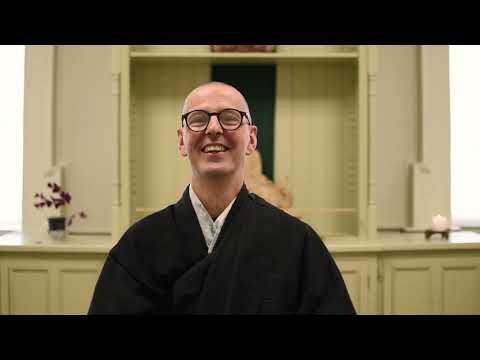
    Here are a couple of short talks by Hõdo, so you can get a sense for what a clear teacher he is ...
    .
    DONATION:
    The event is free, but we ask those who can afford to consider one (or all) of his wonderful books, and/or make a voluntary donation, whatever you might afford and feel's right, to his Sangha, the Dublin Zen Centre, which they work hard to maintain, via this link at their web page (please indicate if you can that Treeleaf sent ya, and it is for this event ):
    .

    Thank you.

    I hope to see you there.

    Gassho, Jundo

    stlah
    Last edited by Jundo; 03-29-2026, 12:02 PM.
    ALL OF LIFE IS OUR TEMPLE
  • Kotei
    Dharma Transmitted Priest
    • Mar 2015
    • 5154

    #2
    Looking very much forward to this. Thank you Jundo.
    I always enjoy the visiting teacher events.

    Gassho,
    Kotei sat/lah today.
    義道 冴庭 / Gidō Kotei.

    Comment

    • Bion
      Senior Priest-in-Training
      • Aug 2020
      • 7031

      #3
      Hello, everyone. Just a reminder about this event, happening on Sunday, in case you can make it.

      Gassho
      sat lah
      "One uninvolved has nothing embraced or rejected, has sloughed off every view right here - every one."

      Comment

      • Seikan
        Novice Priest-in-Training
        • Apr 2020
        • 1108

        #4
        I am very much looking forward to this and plan to attend. Thank you for scheduling this.

        Gassho,
        Seikan
        stlah
        弘道聖簡 Kōdō Seikan
        (Vast Way Sacred Simplicity)

        "If someone asks / about the mind of this monk, / say it is no more than / a passage of wind / in the vast sky."
        —Ryokan

        Comment

        • Guest

          #5
          This was a wonderful talk. Thank you so much. I will revisit the talk several times. Will Rev. Hōdo Gomoku come again to speak about the chaplaincy? It's a coincidence but the subject has been on my mind recently.

          Gassho
          Seido
          Sat Lah

          Comment

          • Koriki
            Novice Priest-in-Training
            • Apr 2022
            • 753

            #6
            Lovely talk. Some great questions. Inspiring to hear about his sewing experiences.
            Gassho,
            Koriki
            s@lah

            Comment

            • Jundo
              Treeleaf Founder and Priest
              • Apr 2006
              • 44391

              #7
              Originally posted by Seido-nigo
              This was a wonderful talk. Thank you so much. I will revisit the talk several times. Will Rev. Hōdo Gomoku come again to speak about the chaplaincy? It's a coincidence but the subject has been on my mind recently.

              Gassho
              Seido
              Sat Lah
              No plan for that, but maybe we can invite a guest sometime soon to speak precisely on that topic. Good suggestion.

              Gassho, Jundo
              stlah
              ALL OF LIFE IS OUR TEMPLE

              Comment

              • michaelw
                Member
                • Feb 2022
                • 363

                #8
                Reflecting on Hōdō’s talk, I have realised something that has honestly surprised me. I had always assumed that the Okesa worn by a lay person conforming to the nyho-e rules for colours was a normal part of nyohō‑e practice, partly because of what we do here at Treeleaf, and partly because of what I’ve read in sources like Riggs and the Tomoe Sewing Book, where Dōgen encouraged both lay people and monks to wear the Okesa.

                After he went back to Japan he strongly recommended to people that they wear the nyoho-e and by his earnest vow many lay people and monks began to wear it

                It turns out that this isn’t the norm in many Sanghas though. In fact, even some sanghas that trace their sewing lineage to Sawaki Rōshi, who revived nyohō‑e as a simple, inclusive practice, they don’t include wearing the Okesa by lay people at all. I’m realising now that Treeleaf’s approach is quite rare, and a faithful continuation of the original spirit of nyohō‑e.
                I’m sharing this not to criticise anyone else, but because it made me appreciate something I hadn’t fully seen before, that our inclusive sewing and wearing of the Okesa is a genuine expression of our heritage, and that it’s available to any of us who feel called to it. It’s a beautiful way to deepen and explore practice.
                Thank you Jundo, Kotei, and Bion, for making this expression of practice available.


                Gassho
                MichaelW

                satlah

                Edit. Now that I have finally got the point Jundo was making on Sunday I have altered the wording so as to avoid 'lay Okesa'.
                M
                Last edited by michaelw; 03-31-2026, 01:39 PM.

                Comment

                • Bion
                  Senior Priest-in-Training
                  • Aug 2020
                  • 7031

                  #9
                  Originally posted by michaelw
                  Reflecting on Hōdō’s talk, I have realised something that has honestly surprised me. I had always assumed that the lay Okesa was a normal part of nyohō‑e practice, partly because of what we do here at Treeleaf, and partly because of what I’ve read in sources like Riggs and the Tomoe Sewing Book, where Dōgen encouraged both lay people and monks to wear the Okesa.

                  After he went back to Japan he strongly recommended to people that they wear the nyoho-e and by his earnest vow many lay people and monks began to wear it

                  It turns out that this isn’t the norm in many Sanghas though. In fact, even those sanghas that trace their sewing lineage to Sawaki Rōshi, who revived nyohō‑e as a simple, inclusive practice, they don’t include lay Okesa at all. I’m realising now that Treeleaf’s approach is quite rare, and in a way, a very faithful continuation of the original spirit of nyohō‑e.
                  I’m sharing this not to criticise anyone else, but because it made me appreciate something I hadn’t fully seen before, that our lay Okesa sewing is a genuine expression of our heritage, and that it’s available to any of us who feel called to it. It’s a beautiful way to deepen and explore practice.
                  Thank you Jundo, Kotei, and Bion, for making this expression of practice available.

                  Gassho
                  MichaelW

                  satlah
                  Yeah, it is an interesting aspect, which takes many forms. The rakusu is a modified version of an Okesa, to be more exact, of the 5-jo one. If we decided to not sew the miniaturized version, but the full one, then everyone would have a big Okesa. Within the tradition, the Okesa itself has many forms, and in some sanghas, for example, lay practitioners will sew a man-e Okesa, which is not made out of cut up pieces and does not have the rice field pattern that we are accustomed to. It is still very much Nyoho, and in accordance with the Vinaya. That Okesa can be used both as a 5-jo or 7-jo, by monks as well. So, there are many variations, but I'd be careful of how we consider them, because convention is also very much a part of the Nyoho spirit, What is appropriate in one place might not be so in another, and one wants to maintain harmony in the community and not cause trouble.

                  gassho
                  sat lah
                  "One uninvolved has nothing embraced or rejected, has sloughed off every view right here - every one."

                  Comment

                  • Jundo
                    Treeleaf Founder and Priest
                    • Apr 2006
                    • 44391

                    #10
                    I'd be careful of how we consider them, because convention is also very much a part of the Nyoho spirit, What is appropriate in one place might not be so in another, and one wants to maintain harmony in the community and not cause trouble.
                    Yes, if visiting another Soto Sangha, which may or may not follow the tradition of lay folks wearing full Kesa ... well, dress as the Roman's dress.

                    Rakusu, of course, is welcome about any Zen Sangha I know, even if received at another Zen Sangha. It is the "universal passport."

                    Gassho, J
                    stlah
                    ALL OF LIFE IS OUR TEMPLE

                    Comment

                    Working...