If this is your first visit, be sure to
check out the FAQ by clicking the
link above. You may have to register
before you can post: click the register link above to proceed. To start viewing messages,
select the forum that you want to visit from the selection below.
Dr. Mori makes some assertions that I might wonder about. He touches upon them briefly in his essay, and expands upon them in his book.
The robot’s relationship with me is like my relationship with the Buddha. Like all other human beings, I was created by the Buddha (by the Void). Every movement of my hand or feet, every blink of my eyelids, is the result of the Buddha’s will. There is no way in which a human being’s body or mind can separate itself even momentarily from the Buddha’s laws. To express it differently, men are appearances brought into being by the Void.
Of course, every thing, person, creature, computer, robot, table, moment in time is the Wholeness of Emptiness (what he calls the "Void" here.) It is so true that everything gives identity to everything, and all things/beings/moments revolve around each other. I am all for the "reflexive," responsive reciprocity of our connection to all (our feet walk the land, the land walks down our feet.) But what is this "Buddha's will" that he seems to compare to our human will in deciding to build a computer or choose directions in driving a car? It could be, but does sound a bit deistic. Does he just mean the laws of nature, physics, chemistry and such, or something else?
I am also a little wondering about statements like this ...
When we forget to respect the buddhanature in the wind and the water, typhoons and floods inform us of our lapse and show us in no uncertain terms how we have not lived up to the buddhanature within ourselves. When we forget the buddhanature in automobiles and other machines we have created, a warning comes to us in the form of accidents or pollution. Everything in the universe constantly tells us that the way to perfect our buddhanature is to respect the buddhanature in other things and people.
If he is somehow implying that our attitude can prevent typhoons, fire, earthquake, I have my great doubts. If he means that we can better prepare for them or avoid some of the harm they do to us (e.g., by not building our homes so brazenly on the coastline where tsunami will occur), or that these events teach us that we are just faces of nature, and we need to accept this fact and the sometime loss, then I am more at home with his point.
That’s kind of like that fundamentalists in the US. Saying that “the gays” cause hurricanes, or that school shootings are caused by people dressing in drag…
My problem when I read ludicrous statements like the above is that I can no longer take serious anything the author says.
Of course, every thing, person, creature, computer, robot, table, moment in time is the Wholeness of Emptiness (what he calls the "Void" here.) It is so true that everything gives identity to everything, and all things/beings/moments revolve around each other. I am all for the "reflexive," responsive reciprocity of our connection to all (our feet walk the land, the land walks down our feet.) But what is this "Buddha's will" that he seems to compare to our human will in deciding to build a computer or choose directions in driving a car? It could be, but does sound a bit deistic. Does he just mean the laws of nature, physics, chemistry and such, or something else?
My interpretation is that he is saying that human creativity is also dependently arisen. The creativity and inspiration comes from everywhere, not just that one person.
If he is somehow implying that our attitude can prevent typhoons, fire, earthquake, I have my great doubts. If he means that we can better prepare for them or avoid some of the harm they do to us (e.g., by not building our homes so brazenly on the coastline where tsunami will occur), or that these events teach us that we are just faces of nature, and we need to accept this fact and the sometime loss, then I am more at home with his point.
I saw it as the latter, that we should understand the power of wind and water, and also our role in their own dependent origination? Our use of cars drives global warming which leads to extreme weather events.
My problem when I read ludicrous statements like the above is that I can no longer take serious anything the author says.
I find that most people and authors make ludicrous statements every now and then. If I ditched every author who did that, I wouldn't be left with much. Instead I look at what makes sense and ignore where they might go too far.
Gassho
Kokuu
-sattoday-
Hi folks,
I just wanted to chime in here. If one reads the works of some histories greatest thinkers (who wrote things and their works weren't lost!) there will be lots of important insights as well as ridiculous (by today's standards) ideas. If an idea seems ridiculous it's because it is so in light of some other idea(s). Our ideas don't exist in discrete boxes like folders but in a kind of interconnected network where they usually reinforce each other. Many ideas are linked to emotions as well. Stuff like terms we use to identify ourselves (gender, sex, ethnicity etc... ) Were quick to get heated when terms related to our identity come up and once were upset we stop listening.
I just think it's a good idea to try and see people's attitudes as emerging from their personal history which would include things like the propaganda were exposed too, endless marketing, the kinds of people we meet growing up, movies and TV. All of this leads to a complex world view that will be particular to that individual. Others who have had a similar history will likely, but not always, have similar views.
I don't really know how to prove the world is round. I'm absolutely certain it is (or roundish) but I've never been to space to see it with my eyes. Based on my experiences just being on the group I would think the earth is mostly flat and kind of bumpy. Many of the things we are certain of were discovered by ourselves but we were informed of them through a information network of some sort. So people who say ridiculous things may be part of a trust network. They trust certain kinds of information from certain people and those people will trust others. Propaganda programs are designed to take advantage of these networks. E.g. if you get your message out to enough people (and those people have the trust of others) it has the chance to become the common wisdom even if it's wrong.
Anywho, just some thoughts. My apologies for the length.
“Because earth, grass, trees, walls, tiles, and pebbles in the world of phenomena in the ten directions all engage in buddha activity, those who receive the benefits of the wind and water are inconceivably helped by the buddha's transformation, splendid and unthinkable, and intimately manifest enlightenment.Those who receive these benefits of water and fire widely engage in circulating the buddha's transformation based on original realization.” -- Dogen
There are lots of people who have written lots of things, some of which I don't like the sound of, many of which will never reach my eyes or ears either! I do try to separate out the good bits someone says from the bits that grate with my views, but it is mired sometimes by the other persons perspective. This person seems harmless enough. We have an "anti-transgender propagandist" coming to New Zealand very soon, after their trouble making in Australia (her rallies curiously attended by Neo-Nazi/far-right groups), the argument here being why is she being allowed into the country. I come at it from two perspectives, one we don't need to hear what she has to say (you can find it on youtube), and the other is that she can visit and we can hope that very few people go to her meetings. We do have fire and brimstone Christianity here, so I'm sure there will be some people attend! The world is so full of views, at least in the old days (pre-internet) you didn't get to know about everyone's views on the planet.
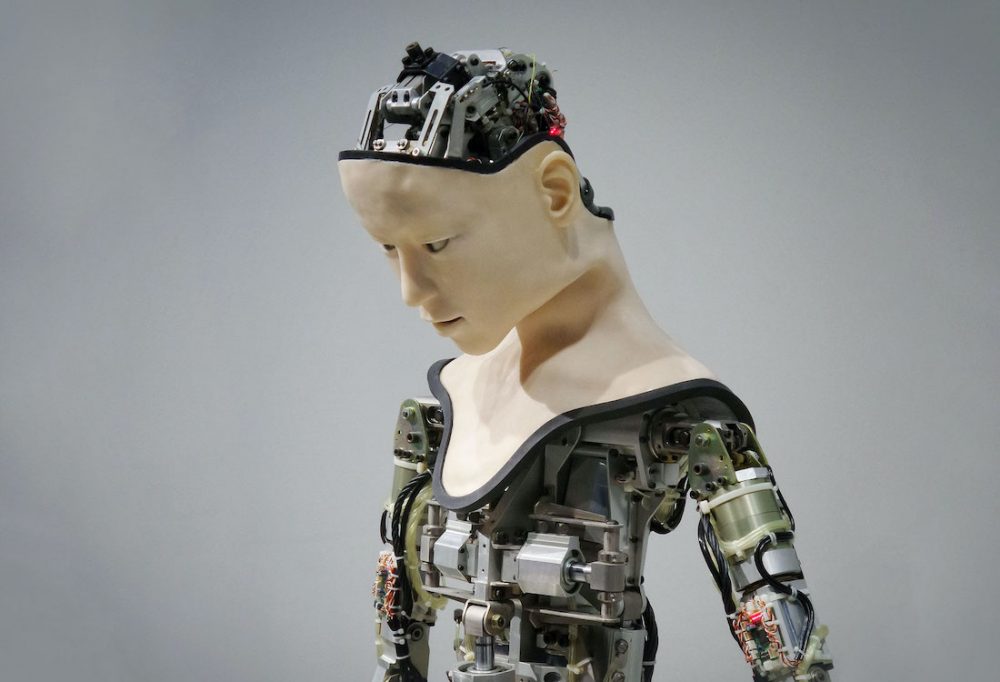
Anyway, we have veered away from the topic of robots having buddha-nature. The question, to me, seems much like any other, is there life after death, are trees conscious, is the universe infinite????
Maybe I will sit zazen and the answer will become manifestly clear!
Gassho, Tokan
satlah
平道 島看 Heidou Tokan (Balanced Way Island Nurse)
I enjoy learning from everyone, I simply hope to be a friend along the way
We process personal data about users of our site, through the use of cookies and other technologies, to deliver our services, personalize advertising, and to analyze site activity. We may share certain information about our users with our advertising and analytics partners. For additional details, refer to our Privacy Policy.
By clicking "I AGREE" below, you agree to our Privacy Policy and our personal data processing and cookie practices as described therein. You also acknowledge that this forum may be hosted outside your country and you consent to the collection, storage, and processing of your data in the country where this forum is hosted.
Comment