Stories of the Lotus Sutra - Chapter 9: Doing the Common Good

Collapse
X
 
  • Time
  • Show
Clear All
new posts
  • Bion
    Senior Priest-in-Training
    • Aug 2020
    • 6960

    Stories of the Lotus Sutra - Chapter 9: Doing the Common Good


    image-10.jpg Good day, everyone. I hope you all had a great weekend.

    It’s time for a new chapter in our book. I want to highlight how wonderful our exploration of this material has been so far. Your reflections have been both enjoyable and thought-provoking, and our Zoom meetings have been immensely productive and fun.

    Now, on to the next story…

    Reading Assignment: Chapter 9 - Doing the Common Good

    At this point, I doubt you need more instructions on how to approach the material, so I’ll spare you the repetition. I suspect that parts of this chapter will spark discussion, while others may stretch and challenge you. I’m curious to see whether that proves true and look forward to reading your thoughts in a few days, once you’ve had time to sit with the text.

    I also know not everyone is enthusiastic about the book right now, and that’s completely normal. If you’re feeling a bit disappointed, try treating this as an opportunity to test your ability to engage thoughtfully with something you might instinctively want to dismiss. You may surprise yourself with what emerges from that effort.

    The recording of last Saturday's meeting is also available for everyone on our Study Page. It was a fantastic discussion.

    Happy reading,


    With metta, and in gassho
    sat lah
    Last edited by Bion; 03-31-2026, 06:01 AM.
    "One uninvolved has nothing embraced or rejected, has sloughed off every view right here - every one."
  • MikeH
    Member
    • Aug 2025
    • 37

    #2
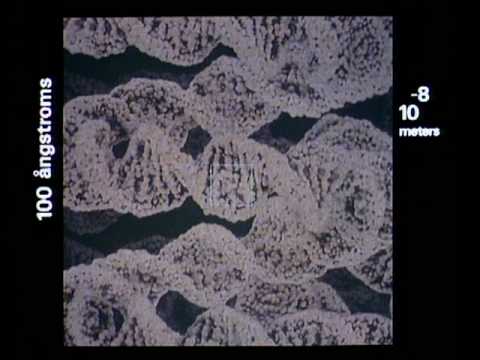
    I loved all the mind-blowing numbers in this chapter--all the millions and billions and trillions and bajillions of Buddhas and worlds around us without us realizing it. It reminded me of the short video posted below that I think tries to accomplish the same thing, of humbling us and filling us with awe. But unlike the video, the Lotus Sutra doesn’t make us feel alone in the universe. Just the opposite.

    What I learned: It seems as if the Lotus Sutra is gradually expanding our field of vision. First we are told about skillful means in general. Then we get a story about a father who uses skillful means to save his children from a fire. Then we get a story about a father who uses skillful means not just to avert a disaster but to bestow enormous wealth on his child. Then we get something even bigger--the skillful rain that nourishes all life on the planet, not just human life, let alone just our family members' lives. And now we are told about a light that illuminates a gajillion billion worlds, like a cosmic rain, after a Buddha attains enlightenment, allowing all people in those worlds to see each other for the first time. It's as mind-blowing as Reeves promised it would be: from narrowly escaping a house fire to seeing infinite alien Buddhas all in the span of a few chapters!

    A question: How do you see this reading picking up on this weekend's discussion about one-many, agency-passivity, absolute-relative? All these themes seem to get picked up again.

    Gassho
    satlah,
    Mike
     
    Last edited by MikeH; 03-31-2026, 01:28 AM.

    Comment

    • Myojo
      Member
      • Jan 2017
      • 14

      #3
      Hi!
      For me - this revolves around liberation vs becoming a Buddha.
      Is it possible to come to liberation and stop there without becoming a Buddha? Is that because the aspiration has never been to become a Buddha?
      If we die liberated and the aspiration to become a Buddha is there - how does a succession of beings arise between now and eventual Buddhahood without desire being involved?
      Last edited by Myojo; 03-31-2026, 04:18 PM.

      Comment

      • Seido-nigo
        Member
        • Dec 2025
        • 44

        #4

        Hello everyone,

        Excuse me for disturbing the flow of conversation, I unfortunately won't be able to continue with the Book Club. Thank you for the discussion and thoughts thus far; I have learned a lot from you all.

        If I have hurt or offended anyone during my time here, I am very sorry.

        In particular I would like to speak to one point before leaving. Naiko raised the point that many parts of the Lotus Sutra regularly read as denigrating the Theravada relative to the Mahayana. I'm grateful to Naiko for sharing this. It had not occurred to me that the text would read this way, and it has only recently occurred to me that by using the word arhat and pondering out loud on Bion's question about the Heart Sutra, my own words might have evoked that same denigration. If this is the case, I apologise sincerely. This reflects my own inexperience.

        This Book Club and the Lotus Sutra is my first time reading any classic Buddhist text. (I was a very obedient child when my previous sangha told me not to read and think so much.) When Things Fall Apart and Comfortable with Uncertainty by Pema Chödrön, which are full of very relatable wisdom, are my only past experiences of books by Buddhists. My concept of arhat is 8 weeks old and consists only of what we have encountered in the Lotus Sutra. My understanding of Theravada and Mahayana = they are two denominations of Buddhism. Full stop.

        I've since tried to read on this further - and can't really claim any further understanding - but in my search I came across a teacher who is of both Zen and Theravada lineages. He speaks here of his own experience learning in both traditions, experiencing them go hand-in-hand (https://tricycle.org/article/theravada-mahayana/) and in this interview of how he is also careful to respect the two traditions for what they are while experiencing them as equal and of the same (https://www.upaya.org/2013/10/living-two-traditions/).

        I found this perspective helpful and share these words with the hope that others might find this helpful too. I wish everyone an enjoyable time with the rest of the book.

        Please excuse me, Bion, I've gone way off piste, but thus endeth my blah and back to Lotus Sutra.

        Gassho
        Seido
        satlah

        Comment

        • Bion
          Senior Priest-in-Training
          • Aug 2020
          • 6960

          #5
          Originally posted by Seido-nigo
          Hello everyone,

          Excuse me for disturbing the flow of conversation, I unfortunately won't be able to continue with the Book Club. Thank you for the discussion and thoughts thus far; I have learned a lot from you all.

          If I have hurt or offended anyone during my time here, I am very sorry.

          In particular I would like to speak to one point before leaving. Naiko raised the point that many parts of the Lotus Sutra regularly read as denigrating the Theravada relative to the Mahayana. I'm grateful to Naiko for sharing this. It had not occurred to me that the text would read this way, and it has only recently occurred to me that by using the word arhat and pondering out loud on Bion's question about the Heart Sutra, my own words might have evoked that same denigration. If this is the case, I apologise sincerely. This reflects my own inexperience.

          This Book Club and the Lotus Sutra is my first time reading any classic Buddhist text. (I was a very obedient child when my previous sangha told me not to read and think so much.) When Things Fall Apart and Comfortable with Uncertainty by Pema Chödrön, which are full of very relatable wisdom, are my only past experiences of books by Buddhists. My concept of arhat is 8 weeks old and consists only of what we have encountered in the Lotus Sutra. My understanding of Theravada and Mahayana = they are two denominations of Buddhism. Full stop.

          I've since tried to read on this further - and can't really claim any further understanding - but in my search I came across a teacher who is of both Zen and Theravada lineages. He speaks here of his own experience learning in both traditions, experiencing them go hand-in-hand (https://tricycle.org/article/theravada-mahayana/) and in this interview of how he is also careful to respect the two traditions for what they are while experiencing them as equal and of the same (https://www.upaya.org/2013/10/living-two-traditions/).

          I found this perspective helpful and share these words with the hope that others might find this helpful too. I wish everyone an enjoyable time with the rest of the book.

          Please excuse me, Bion, I've gone way off piste, but thus endeth my blah and back to Lotus Sutra.

          Gassho
          Seido
          satlah
          Thanks for your participation thus far, Seido. You are more than welcome to hop in as you can if you wish to. You don't need to fully bow out, unless you think it is absolutely necessary. If you are subscribed to the mailing list and think you don't want to receive those anymore, let me know, as well. I do hope you choose to chime in here and there as you can!

          Originally posted by Seido-nigo

          I've since tried to read on this further - and can't really claim any further understanding - but in my search I came across a teacher who is of both Zen and Theravada lineages. He speaks here of his own experience learning in both traditions, experiencing them go hand-in-hand (https://tricycle.org/article/theravada-mahayana/) and in this interview of how he is also careful to respect the two traditions for what they are while experiencing them as equal and of the same (https://www.upaya.org/2013/10/living-two-traditions/).
          We actually have someone in our own lineage (Nishijima Roshi's) who has also taken the full bhikshuni precepts. Some time ago we also had a guest speaker, Ven. Dhammadipa, who was both a bhikshuni and a fully transmitted Zen teacher. There si room for flexibility when one's heart is open enough, I believe.

          Gassho
          sat lah
          Last edited by Bion; 03-31-2026, 12:52 PM.
          "One uninvolved has nothing embraced or rejected, has sloughed off every view right here - every one."

          Comment

          • Chikyou
            Member
            • May 2022
            • 1045

            #6
            Seido, I have really enjoyed your contributions here and am sad to see you go!!!

            Mike, I also really enjoyed the expressions of very large numbers in this chapter. They made me feel small, insignificant, but not in a pessimistic way. More that, my problems here on earth are much, much smaller than I could ever fathom and the cosmos is much, much bigger than I could ever imagine. I found it deeply reassuring.

            I took particular note of Reeves’ assertion that the kings of heaven were “giving up the pleasures of meditation” to help the new Buddha-to-be attain buddhahood, and that this teaches that meditation is not enough, and that action in the world is necessary. While I agree with Reeves’ conclusion (that meditation is not enough and that action in the world is necessary), that’s not at all how I read it. (I’m not saying Reeves’ is wrong and that this isn’t the intended message, just that it never occurred to me!!!) It’s really neat how we can all read the same text and take away something completely different from it.

            Gassho,
            SatLah,
            Chikyō
            Chikyō 知鏡
            (Wisdom Mirror)
            They/Them

            Comment

            • Taikyo
              Member
              • Aug 2025
              • 44

              #7
              Reading the eighth chapter, I encountered elements and descriptions already familiar from Purana literature (Brahma, tens of thousands of years of meditation to attain certain powers or blessings, demigods, heavenly planets, showers of flowers, and so forth). It seems clear that the authors of the Lotus Sutra intended to capture the attention of an audience accustomed to this type of narration, weaving the Buddha’s teaching through such marvelous depictions.

              What stayed with me after reading is the question: what benefit or useful message can I draw from this that I can apply in my daily practice? These incredible descriptions leave me indifferent; in fact, I skimmed over them without giving them much importance, searching instead for the essential message that might be hidden there and prove useful.

              I wonder is anybody find practical value in these mythological and grand depictions, or do you also look past the imagery to seek the core teaching? How do you approach such passages in your own practice?

              Gassho,
              sat/lah
              Taikyo
              Taikyo / 泰居 ​
              "calm presence"

              Comment

              • Bion
                Senior Priest-in-Training
                • Aug 2020
                • 6960

                #8
                Originally posted by Taikyo
                What stayed with me after reading is the question: what benefit or useful message can I draw from this that I can apply in my daily practice? These incredible descriptions leave me indifferent; in fact, I skimmed over them without giving them much importance, searching instead for the essential message that might be hidden there and prove useful.

                I wonder is anybody find practical value in these mythological and grand depictions, or do you also look past the imagery to seek the core teaching? How do you approach such passages in your own practice?

                Gassho,
                sat/lah
                Taikyo
                Excellent question, Tai! I’m much more of a literal kind of guy, so most of these extravagant descriptions usually leave me unimpressed. Still, trying to imagine something like grinding the world into grains of sand and scattering them across millions of worlds stretches the limits of imagination and comprehension. In doing so, it can soften the mind’s fixed ideas about time, measurement, and size.

                It raises questions: How numberless is “numberless” when we say, “Beings are numberless and we vow to free them”? How many worlds would we need to grind into sand to even begin to match the number of “the inexhaustible delusions we must strive to transform”? If greed, anger, and ignorance are beginningless, how many universes could we stack when there is no limit, and how many fathers and mothers have we had when there is no starting point to existence or to the circle of rebirth? If the young man tried for billions of eons to awaken, and even had heavenly kings try to help him, how diligent must we be regarding practice in our short present life?
                In this way, it seems to me, these fantastic descriptions can actually be quite helpful.

                Gassho
                sat lah
                "One uninvolved has nothing embraced or rejected, has sloughed off every view right here - every one."

                Comment

                • Taikyo
                  Member
                  • Aug 2025
                  • 44

                  #9
                  Originally posted by Bion

                  Excellent question, Tai! I’m much more of a literal kind of guy, so most of these extravagant descriptions usually leave me unimpressed. Still, trying to imagine something like grinding the world into grains of sand and scattering them across millions of worlds stretches the limits of imagination and comprehension. In doing so, it can soften the mind’s fixed ideas about time, measurement, and size.

                  It raises questions: How numberless is “numberless” when we say, “Beings are numberless and we vow to free them”? How many worlds would we need to grind into sand to even begin to match the number of “the inexhaustible delusions we must strive to transform”? If greed, anger, and ignorance are beginningless, how many universes could we stack when there is no limit, and how many fathers and mothers have we had when there is no starting point to existence or to the circle of rebirth? If the young man tried for billions of eons to awaken, and even had heavenly kings try to help him, how diligent must we be regarding practice in our short present life?
                  In this way, it seems to me, these fantastic descriptions can actually be quite helpful.

                  Gassho
                  sat lah

                  I really appreciate the attempt to imagine the “numberless.” For me, one thought keeps returning: among the numberless beings, the first I must free is myself; among the numberless worlds, I have only this present one; among the inexhaustible delusions, I face my own greed, anger, and ignorance here and now; among the numberless parents and births, I am living this single life.

                  It reminds me of the story of Garuda, the divine bird, who saw a tiny bird trying to empty the ocean with its beak to save its young. Admiring such persistence, Garuda joined in, and the ocean was compelled to return the eggs. In the same way, I believe that through persistence and actions within our limitations, we can take at least one step toward awakening.

                  Gassho
                  Taikyo / 泰居 ​
                  "calm presence"

                  Comment

                  • Bion
                    Senior Priest-in-Training
                    • Aug 2020
                    • 6960

                    #10
                    Originally posted by Taikyo


                    I really appreciate the attempt to imagine the “numberless.” For me, one thought keeps returning: among the numberless beings, the first I must free is myself; among the numberless worlds, I have only this present one; among the inexhaustible delusions, I face my own greed, anger, and ignorance here and now; among the numberless parents and births, I am living this single life.

                    It reminds me of the story of Garuda, the divine bird, who saw a tiny bird trying to empty the ocean with its beak to save its young. Admiring such persistence, Garuda joined in, and the ocean was compelled to return the eggs. In the same way, I believe that through persistence and actions within our limitations, we can take at least one step toward awakening.

                    Gassho
                    To offer you a bit of a challenge, try to think past the idea of self or no self, self first, other second... What is the reality of multiplicity or numbers when no separation exists? The bodhisattva is not much about the self . Also, this present world is not just one world; it´s many worlds, known and unknown. To think of it in terms of dirt and air, land masses and waters is to make it too small. This single life is many lives, reborn moment after moment, as well. Greed, anger, and ignorance have numberless faces, and one needs to use all the skillful ways to spot them. That´s my challenge... and maybe the Dharma Flower Sutra´s as well..

                    gassho
                    sat lah
                    "One uninvolved has nothing embraced or rejected, has sloughed off every view right here - every one."

                    Comment

                    • Taikyo
                      Member
                      • Aug 2025
                      • 44

                      #11
                      Originally posted by Bion

                      To offer you a bit of a challenge, try to think past the idea of self or no self, self first, other second... What is the reality of multiplicity or numbers when no separation exists? The bodhisattva is not much about the self . Also, this present world is not just one world; it´s many worlds, known and unknown. To think of it in terms of dirt and air, land masses and waters is to make it too small. This single life is many lives, reborn moment after moment, as well. Greed, anger, and ignorance have numberless faces, and one needs to use all the skillful ways to spot them. That´s my challenge... and maybe the Dharma Flower Sutra´s as well..

                      gassho
                      sat lah
                      Challenge accepted

                      The Buddha never asks us to completely give up our own interests, our own good, to
                      be completely selfless, to serve only the good of others. The Buddha does ask us to go
                      beyond our own good, to understand and to feel deeply that we are related to a whole
                      cosmos of living beings, and to know that it is by doing something for the good of all
                      that we ourselves can realize our own highest good—the Buddha in us.
                      The quote from Gene Reeves nicely illustrates the mentioned challenge.

                      Gassho
                      Taikyo / 泰居 ​
                      "calm presence"

                      Comment

                      • Onsho
                        Member
                        • Aug 2022
                        • 304

                        #12
                        I assume one of his sons took the picture at the start of this thread.

                        While I have not been posting here every week I've actually been very engaged in these stories. My fiancé and myself have been reading them independently and discussing them as part of our date night once a week and it has been really special.

                        What makes this chapter important to me:
                        -Someones enlightenment is dependent on everyone else, the impossibility of doing anything alone.
                        -Efforts to awaken directly benefit all beings. The longer I practice the more I see this principle come to life.
                        -The commentary has the cleanest, most practical explanation of the four noble truths that I have ever read. Took a picture, favourited it, tripped out on it for a bit.

                        And my biggest realization from studying this week happened when I was walking from my house to my shop as I tend to do 20 billion trillion times a day. The warm, spring breeze blue under my nose and pushed the dead autumn leaves off of the path in front of me while the birds were singing loudly. It occurred to me that all the kings of the brahma heaven, and all the gods in the lower heaven were working their hardest, for my practice in that very moment.

                        Gassho
                        Onsho
                        satlah

                        Everyone should practice shaking their cat in the six directions this week.

                        Comment

                        • Tenryu
                          Member
                          • Sep 2025
                          • 242

                          #13
                          Originally posted by Taikyo
                          What stayed with me after reading is the question: what benefit or useful message can I draw from this that I can apply in my daily practice? These incredible descriptions leave me indifferent; in fact, I skimmed over them without giving them much importance, searching instead for the essential message that might be hidden there and prove useful.

                          I wonder is anybody find practical value in these mythological and grand depictions, or do you also look past the imagery to seek the core teaching? How do you approach such passages in your own practice?
                          I don’t really try to decode those passages or look past them too quickly. What interests me more is what they stir up while reading. These big, mythological images tend to bring up something, sometimes curiosity, sometimes distance, sometimes a bit of resistance.

                          It’s a bit like the kind of agreement we make with a film or a book that really draws us in. I don’t sit there thinking “this isn’t real.” I just let it work and see what it does.

                          Afterwards, it becomes clearer what actually landed and what just passed through. And even that can change over time.

                          As for this chapter, it leaves me with a quiet sense of being connected with everything else. Not as an idea, more like a small shift in how things are felt. That moving beyond our own concerns and doing something for the good of all is not separate from our own path, but part of it.

                          So for me, the imagery itself is already part of the practice.

                          Gasshō,
                          Tenryū
                          sat&lah
                          恬流 - Tenryū - Calm Flow

                          Comment

                          • Jundo
                            Treeleaf Founder and Priest
                            • Apr 2006
                            • 44286

                            #14
                            Sorry to jump in ...

                            ... and discussing them as part of our date night once a week ...
                            I never thought of the Lotus Sutra as romantic, part of a "date night" ... but that is wonderful!

                            I can see it ... some candlelight, a little back rub, a warm bath for two ... and the Parable of the Rich Father and Poor Son ... Lovely.

                            Gassho, J
                            stlah
                            ALL OF LIFE IS OUR TEMPLE

                            Comment

                            • Ryūdō-Liúdào
                              Member
                              • Dec 2025
                              • 140

                              #15
                              I feel that this chapter in the sutra uses these enormous time scales to break a common assumption: “I should understand this quickly.”

                              It feels like the text is pointing to something slower and more patient: that understanding unfolds according to conditions, sometimes gradually, sometimes across what feels like lifetimes. The teaching doesn’t stop with the Buddha speaking; it continues in how we live and practice, regardless of what “stage” we think we’re at. He teaches, then he rests, and we carry it forward.

                              One hears a teaching. They nod. They forget.
                              Years later, while washing a bowl, they suddenly understand.

                              Was it the bowl?
                              Or was it always working?

                              Gasshō,
                              流道-Ryūdō-Liúdào
                              Satlah

                              Comment

                              Working...