Stories of the Lotus Sutra - Chapter 7: The Rich Father and the Poor Son

Collapse
X
 
  • Time
  • Show
Clear All
new posts
  • Chikyou
    Member
    • May 2022
    • 1046

    #16
    Originally posted by MikeH
    I'm glad you raised Reeves' Buddha-Jesus parallel. ("The Buddha may not even go by the name of a buddha. Sometimes perhaps he goes by the name of Christ..."). I see the point, but I didn't love what Reeves said here, mainly because it might feel condescending to Christians and invite unnecessary negative reactions from them. So it's not "skillful means." It reminded me of the Jesuit idea of "anonymous Christians"--everyone who is trying to live a good moral life (the Buddha, for example) is really just a Christian, whether they realize it, like it, or not. It feels passive-agressive to me: "Your god is actually just my god in disguise!" "No way! It's your god who's really just my god in disguise!" Can we just....not?

    If Reeves wanted to mention Jesus in this chapter, then he had some very low-hanging fruit that he could have picked and savoured. This Sutra story about the lost son is strikingly similar to the story in Luke 15 about the prodigal son. So interesting! The stories were written roughly around the same time too, from what I gather. Possible influence one way or the other? Or just common parable theme because it is so typically human? Child thinks he knows best; child leaves loving home to live "freely"; child learns that in fact he does not know best; child suffers and is far from being free; child returns home content just to be a servant in his household; child is surprised by parent's forgiveness and generosity; party for child ensues.
    I didn’t see it that way (I interpreted it more in the way Bion did - one great ocean) however, now that you mention it, I see how it could be interpreted that way. (As for which of the two Reeves was going for, I don’t know. I do notice that Reeves seems to see everything through a Christian lens, which others have also noticed, and to me, the Dharma is so different from the framework that Christianity exists in that it’s difficult to compare them without feeling like it’s “apples to oranges”.)

    Gassho,
    SatLah,
    Chikyō
    Chikyō 知鏡
    (Wisdom Mirror)
    They/Them

    Comment

    • Tairin
      Member
      • Feb 2016
      • 3287

      #17
      Hi Everyone,

      Personally I enjoyed this chapter and I think part of it comes down to accepting that this is Reeves commentary. I think I showed up with different expectations and so those expectations have been colouring my readings. I decided to let that go and read what Reeves has to say.

      Over all this is a very positive chapter. Some quotes that caught my eye (and others too based on the comments above)

      ... we are like someone wondering around, destitute, impoverished, without purpose. miserable. In a sense, this is the destiny of those who do not, in some way, follow the Buddha Way. THis does not mean, however, that one has to be Buddhist in the ordinary sense. To follw the Buddha is to put one's trust in and devote oneself to the happiness of others and the life of the whole. It is to share in a kind of common human faith that life is meaningful, a faith that finds expression in a variety of religious and other forms.
      I don't think we need to look very hard these days to find those who are lost. I hope they eventually find their way.

      ... there is no such thing as a "hopeless case". Everyone, without exception, has within himself or herself an inner strength, a great power, to flourish in some way.
      I know some people's circumstances are worse than others. I hope for those, they can find some happiness, satisfaction, and peace.

      ... it is not easy to be a follower of the Dharma Flower Sutra or of the bodhisattva way. It in volves taking responsibility both for one's own life and for the lives of others.
      This is not an easy path. It is not for cowards or the lazy.

      One of the basic lessons of the Lotus Sutra is that one can find in every situation that there is something to be learned.
      I basically said exactly this in response to Shokai's 86th Gate of Dharma Illumination.


      Tairin
      sat today and lah
      泰林 - Tai Rin - Peaceful Woods

      Comment

      • Taikyo
        Member
        • Aug 2025
        • 44

        #18
        Ten years ago, I told myself I would stop reading books. I felt they mostly filled and entertained the mind, while what I really needed was direct experience.

        And yet, here I am—reading again.

        What feels different now is that while reading Stories of the Lotus Sutra and Reeve’s commentaries, I’m not just collecting ideas—I’m engaging with them in a more experiential way.

        In the story of the rich father and the poor son, what stood out to me is the importance of self-respect and self-confidence as something essential to our existence.

        At first, the idea that we are ‘children of the Buddha,’ with the Buddha as a kind of ‘father,’ sounded almost theistic to me—suggesting dependence on something higher.

        But reading further, it seems to point in another direction. Through the bodhisattva path, it suggests that even without realizing it, we are already on the way to becoming Buddhas ourselves—especially through helping others.

        So rather than dependence, this feels more like a call to recognize an inherent dignity and potential within.


        Taikyo
        sat/lah
        Taikyo / 泰居 ​
        "calm presence"

        Comment

        • Chiko
          Member
          • Oct 2015
          • 103

          #19
          Originally posted by MikeH
          Something that really stood out: "The Buddha's wealth--supreme awakening or enlightenment--is not something you have to earn or purchase in any way; it already belongs to you; it was yours from before your birth; it is your rightful inheritance." Wow. Just wow. If I could just realize that, I'd stop shoveling dung all day.
          I really liked this passage too--it makes me feel grateful for this life and grateful for our dharma inheritance. I think the father was very wise to let the son continue shoveling dung. He met him where he was. And we need the dung, actually. As Bion said, no dung no practice (paraphrasing).

          And what is our inheritance? The path to freedom? The assurance that every step on the path is also the destination? A dung shovel pointing at the moon?

          Gassho,
          Chiko
          st/lah

          Comment

          • Maro
            Member
            • Dec 2025
            • 59

            #20
            Originally posted by Taikyo
            Ten years ago, I told myself I would stop reading books. I felt they mostly filled and entertained the mind, while what I really needed was direct experience.

            And yet, here I am—reading again.

            What feels different now is that while reading Stories of the Lotus Sutra and Reeve’s commentaries, I’m not just collecting ideas—I’m engaging with them in a more experiential way.
            To me it feels like the difference between trying to satisfy "an intellectual hunger" (which I understand as a kind of greed) and reading a map (so as to find your way in an unknown terrain and you appreciate the support of a map)

            Gassho
            Maro
            satlah
            Last edited by Jundo; 03-23-2026, 01:12 AM.

            Comment

            • Seido-nigo
              Member
              • Dec 2025
              • 44

              #21

              I loved this chapter. So much of what Reeves said in his commentary matches the truths I've experienced on the Way thus far. The parts that resonated most with me:
              Sometimes an unpleasant situation or task can be understood as being a present given to us by the Buddha, an opportunity for learning and growth…Of course, what might be learned in some situations is that the best thing to do is to change the situation or even flee from it.
              I was offered so many opportunities, but it took me so very long and so many Dharma gates to walk through, to learn that walking away is an act of courage and a radical choice of self-respect. The same is true of knowing when to dig my feet in and hold my ground.

              Belonging to a Buddhist temple or organization is not, in itself, the Buddha Way, nor is it the only way to enter or follow the Buddha Way...The “universal gate” is many gates, many more than you or I could possibly know in a lifetime.
              This aligns with how I experience the Way as well and though it may offend others and in time my understanding may change, I recognize our reality of Buddha nature in so many things that are not "Buddhist" and surely it must be so, how else would other people enter the stream if they never encounter "Buddhism"? After Jundo's first talk on Tong'an Changha The Mindseal, I read this poem by Rumi, a Sufi (Muslim) mystic, and wonder if he did not have a sense of it:

              “Out beyond ideas of wrongdoing
              and rightdoing there is a field.
              I’ll meet you there.
              When the soul lies down in that grass
              the world is too full to talk about.”


              When I heard Jundo's kusen on Peace within, Peace without and the Still, still heart, and remember the lotus in the kiln, the dirt is the window, I think the Quakers in Britain knew something of this in the little red book, Advice & Queries of Quaker Faith and Practice:

              Come regularly to meeting for worship even when you are angry, depressed, tired or spiritually cold. In the silence ask for and accept the prayerful support of others joined with you in worship. Try to find a spiritual wholeness which encompasses suffering as well as thankfulness and joy. Prayer, springing from a deep place in the heart, may bring healing and unity as nothing else can. Let meeting for worship nourish your whole life.

              It's not that I'm bringing these texts under a Buddhist umbrella or saying they're actually Buddhists, it's that I think the many ways in which humanity expresses itself collectively - through different religions, cultural practices, the arts, the sciences, literature, poetry - these can refer to a common universality of humanity and beyond. And it will come in different forms, names, shapes but it is all the great ocean, the mind seal.

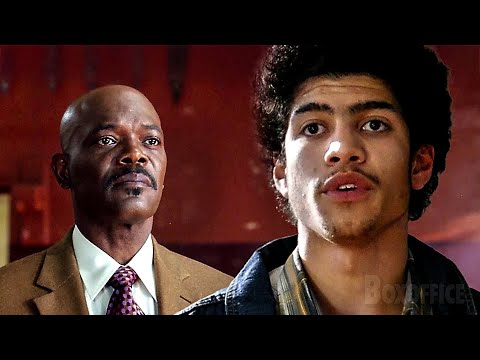
              So I accept the Buddha-Jesus/Jesus-Buddha/Juddha-Besus/all-other-permutations-thereof. Frankly, the immediate thought I had after reading this chapter was this scene from the movie Coach Carter (which is based on a true story!):


              And there is something here that I feel touches our truth, that great ocean, and guys, it's a Hollywood movie (womp, womp). I was going to make a joking-not-joking statement: Samuel L Jackson = the Buddha and we = the delinquent Richmond High basketball team but distinctly feel this is only amusing to yours truly...

              Chikyou, I know for a fact that there are Quakers at Friends House, London, who are Buddha-admiring-Jesus-believers so we would be welcome at Friends House to sit at Meeting for Worship and we could gassho and sit and all would be well. And we can sit zazen here and be Jesus-admiring Buddhists and all is well.

              It is not easy to be a follower of the Dharma Flower Sutra or of the bodhisattva way. It involves taking responsibility, both for one’s own life and for the lives of others.
              You can't unknow a truth, which is a heavy backpack to carry. This reminded me of the story of Chenrezig, how he tried so hard to save everyone, and how he shattered in despair when he realised suffering beings were endless and he believed his vow impossible. The buddhas and bodhisattvas responded to his despair, put him back together, gave him a thousand arms and multiple heads so he could keep going with renewed strength. We're not alone in this bodhisattva way, though it may feel like it at times. (Side note: does anyone know where I can find the original of this story?)

              We should never become complacent and satisfied with some lesser level of awakening, such as some great experience of nirvana, but always pursue the Buddha Way.
              I have been thinking of the arhats, and Avalokiteshvara and Shariputra in the Heart Sutra. At the beginning of this chapter, the four monks say:

              “We leading monks, old and worn out, believed that we had already attained nirvana and could go no further. So we did not seek supreme awakening. The World-Honored One has been preaching the Dharma for a long time, and all the while we have been sitting in our places, weary in body and mindful only of emptiness, formlessness, and non-action.
              Did the arhats trap themselves in the concept of a "free, empty, non-action mind"? Like in the Mind seal: "Don’t say that a free and empty mind is the Way; A free and empty mind is still separated from it by a great barrier.", they're stuck in a "Buddhist" Sackgasse, a close, a dead-end street? The Heart Sutra is their way out? My brain is still chewing on this.

              Gassho
              Seido
              Satlah
              Last edited by Seido-nigo; 03-22-2026, 11:28 AM.

              Comment

              • MikeH
                Member
                • Aug 2025
                • 37

                #22
                Originally posted by Seido-nigo
                So I accept the Buddha-Jesus/Jesus-Buddha/Juddha-Besus/all-other-permutations-thereof. Frankly, the immediate thought I had after reading this chapter was this scene from the movie Coach Carter (which is based on a true story!)…

                And there is something here that I feel touches our truth, that great ocean, and guys, it's a Hollywood movie (womp, womp). I was going to make a joking-not-joking statement: Samuel L Jackson = the Buddha and we = the delinquent Richmond High basketball team but distinctly feel this is only amusing to yours truly...
                There are so many insightful and helpful comments in your post, Seido! Thank you for that, and I look forward to discussing all of it when our group meets next week. In the meantime, I simply can’t resist imagining how Samuel L. Jackson, as a Buddha, would call all of us to quiet down and meditate.

                Gassho,
                MikeH
                satlah
                 

                Comment

                • Ryūdō-Liúdào
                  Member
                  • Dec 2025
                  • 140

                  #23
                  I found myself relating to this story in a very simple way: A man thinks he is poor. So he lives like a poor man.

                  One day, someone tells him, “You own the whole house.” He laughs and continues sweeping the floor.

                  Years pass.

                  Eventually, he looks around and realizes: “I never left the house.”

                  Nothing was given.
                  Nothing was gained.
                  Only a misunderstanding ended.

                  Gasshō,
                  流道-Ryūdō-Liúdào
                  Satlah

                  Comment

                  • Seiraku
                    Member
                    • Feb 2025
                    • 54

                    #24
                    Reading everyone's thoughts so far is like drinking different kinds of refreshing water. The Christian parable of the prodigal son was in my head when I started reading this story, and I expected the rich father to get the son to believe in his identity sooner (instead of after 20 years), but of course here the son doesn't know he's the son and thinks he's in a lowly position. There also isn't the sin-forgiveness angle in this, more like identity being realized slowly.

                    Also, to add on the quote "The Buddha may not even go by the name of a buddha. Sometimes perhaps he goes by the name of Christ..." I think there are ways to follow any religion that can increase compassion and 'oneness' or ways that increase separation. Perhaps there's a vehicle working when people are drawn to the former. I've been part of denominations across the whole spectrum for sure.

                    Gassho,
                    Seiraku
                    Satlah
                    everything is unhindered,
                    clouds gracefully floating up to the peaks,
                    the moonlight glitteringly flowing down mountain streams.​

                    Comment

                    Working...