Stories of the Lotus Sutra - Chapter 1: The Enchanting World of the Lotus Sutra

Collapse
X
 
  • Time
  • Show
Clear All
new posts
  • Bion
    Senior Priest-in-Training
    • Aug 2020
    • 6973

    #31
    Originally posted by Kinshu
    Hello Chikyou!

    So nice to exercise our imagination! Isnt it? Lol
    I don't have such in-depth knowledge, but I imagine that all sentient beings can have "Buddha-nature," but it seems to me that we must go through the human species to become Buddhas. Shakyamuni was in the human species when he attained enlightenment. Certainly, the ant accumulates karma, but its mind is too limited to become a Buddha, although there are certainly ants much smarter than me! Lol
    From an early buddhist perspective, yes, being human was a requirement for Buddhahood, but then, so was not having a Buddha existing in the world, and so was being a man.. In the modern Mahayana view, a broader understanding of Buddha is generally accepted, and so ants, crickets, humans, devas, all critters and non-beings, all are Buddha. In a sense, maybe not every creature can or needs to awaken to that realization, but the being part is solved in Mahayana

    Gassho
    sat lah
    Last edited by Bion; 02-07-2026, 10:49 PM.
    "One uninvolved has nothing embraced or rejected, has sloughed off every view right here - every one."

    Comment

    • guehla
      Member
      • Dec 2014
      • 14

      #32
      Originally posted by Taikyo
      I want to thank Jundo for the beautiful photos.

      Reading the beginning of the first chapter, I was surprised by the author’s astonishment at the presence of such a large assembly gathered to hear the Lotus Sutra on a small mountain peak. In ancient India, at the same time when the Puranas were also composed, it was entirely natural within the cosmology of the people of that time that celestial beings would be present at important gatherings and events (as Gene Reeves himself enlists them). Their presence conferred great significance upon the occasion. According to the Puranic stories, such beings do not belong to this world and require no physical space—they hover somewhere above, with a perfect view.

      But what intrigues me even more, as mentioned further in the reading, is the idea of a “two‑truth theory”: the distinction between conventional truth and ultimate truth. It is an idea I would like to explore—how to balance them in everyday life. On the one hand, imagination can be a powerful tool to open a broader view; on the other hand, there is always the danger of becoming lost in an imaginative world if it is mistaken for the truth.

      Gassho
      Taikyo
      sat/lah

      This struck me as well...especially the idea that the assembly is literally gathered "on" the peak. Looking out over that particular landscape, it's not hard to envision a great assembly of beings gathered in the hills all around, stretching far off into the distance. To me it seems obvious the context resembles the sermon on the mount or Black Elk addressing the powers in the land. I can imagine the whole premise of this universal assembly being inspired by long periods of meditation and probably other austerities on exactly that peak, connecting with the world stretching all around.
      Attached Files

      Comment

      • guehla
        Member
        • Dec 2014
        • 14

        #33
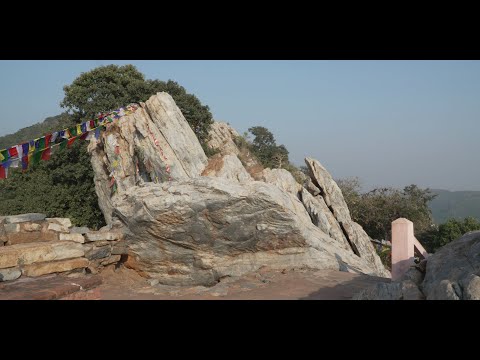
        This short video does an alright job providing more context for Eagle Peak
         

        Comment

        • guehla
          Member
          • Dec 2014
          • 14

          #34
          I found the book’s introduction interesting, but am looking forward to getting into the stories themselves. In some ways I feel like commenting too much so soon is like expounding on the customs of a country you’ve got your bags packed to visit while still sitting in the airport. That said, a few initial thoughts:

          1. Since Eagle Peak was already widely known as one of Shakyamuni's favorite places to meditate and the site from which he had delivered other sutras, it seems to me it’s choice as the setting for this sutra acted as a geographic “Thus have I heard.”

          2. I found myself reminded that any given sutra or sacred text isn’t a stand-alone item. They’re produced in the context of communities of practice with hundreds of yeas of tradition in cultures vastly removed from our own. I mean, even Dogen-zenji’s writings can be bewildering outside of the practice of zazen.

          One comment mentioned the role mandalas can play, and in the same way, I think the Lotus Sutra can be seen as an artistic and cultural representation of the insights of its authors. As Thomas Merton once said of the Mahayana sculptures at Polonnaruwa in Sri Lanka, those who carved them were “not ordinary people.”

          3. In the video chat, someone pointed out the importance of emptiness in a reading of the sutra. In the same vein, I read somewhere that sacred texts are valuable to the extent they’re read in the same spirit in which they were created. So I feel like while it can be instructive and maybe even fun looking at the text from my detached Western perspective, I also want to try to understand it as its creators did (though that’s probably a tall order).

          4. I was also reminded of the communities of practice still alive today that have honoring the Lotus Sutra at their core. For some anyway, reading the material is definitely not the main thing they're doing. I’m thinking in particular of the Japanese order Nipponzan Myohoji—dedicated to non-violence, they establish peace pagodas (including Shanti Stupa near Eagle Peak) and organize peace walks around the globe, including this one coming up:
          Fukushima to Niigata: March 1 to 16, 2026 A prayer walk held every year since 2008 “Care for life” may sound like an obvious sentiment, but in fact, our daily lives require the sacrifice of other lives to function. Whether we accept their  sacrifices with gratitude or not is something we


          The teachings of the Lotus Sutra and the order's founder is behind all they do.

          5. My question, and probably not answerable: I’d really like to know how much of a role psychedelics played in the creation, not just of the Lotus Sutra, but the ancient world views it was drawn from!

          Comment

          • Bion
            Senior Priest-in-Training
            • Aug 2020
            • 6973

            #35
            Originally posted by guehla
            5. My question, and probably not answerable: I’d really like to know how much of a role psychedelics played in the creation, not just of the Lotus Sutra, but the ancient world views it was drawn from!
            I really cannot say much about psychedelics; they’ve never been a particular point of interest for me. However, I can say that many new ideas have arisen from powerful hallucinations that occurred during extremely intense meditative practices. Among these are the bodhisattva bhūmis (stages in the development of a bodhisattva) and the existence of Amitāyus Buddha and his Pure Land, as two significant examples. This, according to scholars.. I positively was not there

            Gassho
            sat lah
            "One uninvolved has nothing embraced or rejected, has sloughed off every view right here - every one."

            Comment

            • Choujou
              Member
              • Apr 2024
              • 591

              #36
              Hello everyone!
              Bion, you didn’t tell me we were reading a paranormal/supernatural book!!! This is right up my alley! As many may already know, I’m very into the strange and unusual… so of course this aspect stood out to me… however, the strange and unusual is not the point! Let me explain…

              (First off, right off the bat, I didn’t realize that dragons, satrys, centaurs etc… were part of the Buddhist world, even on the mythical side. I find it interesting that these creatures are depicted across numerous cultures and wonder where the origins of this come from? Perhaps through mythical stories from different cultures told by mouth along trade routes? Maybe something to look further into just out of curiosity for me.)

              We do live in an enchanting world… and quite a weird one at times. While the stories in the lotus sutra are mythical, having worked in the paranormal world, people do have some strange experiences in real life. I can tell you I’ve had some moments that I couldn’t explain. In fact, it was a supernatural experience that brought me to the path of Zen over a course of years… that’s a long story and one I don’t share unless asked to… but for all the weird occurrences and strange encounters that people have, afterwards they are left back right here, right now, in the real world. I have found that these enchanting and somewhat “magical” or mythical type experiences (whatever they may be) would often lead people to some type of realization, reconciliation, or peace with something here in the real world. While strange, in the end, it was about something here in our ordinary world that needed to be addresses or worked on. I soon came to realize that it wasn’t about the experiences themselves, and more about what the experiences were trying to direct someone to, or point to. A strange and unusual hand pointing to the moon so to speak… as reeves tells us:

              “In other words, the imagination, which makes it possible to soar above the realities of everyday existence, also makes it possible to function more effectively in this world.”

              Whether the experiences were imagined or real, it doesn’t really matter. What matters was what it meant to the person and what they did with it afterwards, how it impacted them, changed them for the better and/or made positive change in their life. I imagine that the stories we find in the lotus sutra will be similar… while fantastic and mythical, they speak to a deeper truth that we feel deep within.

              “I call this a world of enchantment. And enchantment, here, means a certain kind of fascination with the ordinary world. It means finding the special, even the supernatural, within the ordinary world of our existence. It means seeing this world itself as different, as special—as important and valuable. And this means that our lives—how we live and what we do—are important, not only for ourselves, but also for the Buddha and for the entire cosmos.”

              As Jundo has said, The miracle is not walking on water (or in my weird world, it’s not in ghostly encounters, aliens, and Bigfoot, or the like ) but in walking here on the earth! Out of all the possibilities that could have happened, here we are! Alive and walking the path of the Buddha! How lucky are we to be here, to hear the Dharma, and to help to liberate all sentient beings?! What a miracle!

              “This is the world in which all human beings are offered a special opportunity to be bodhisattvas and practice the Buddha Way, the way by which we too can be buddhas, buddhas right here on earth in the midst of the world’s suffering, including our own.”

              Gassho,
              Choujou

              sat/lah today
              Last edited by Choujou; 02-08-2026, 02:53 AM.

              Comment

              • Seido-nigo
                Member
                • Dec 2025
                • 44

                #37
                Everyone has such deep thoughts! I am still in processing mode, not yet having come to any conclusions.

                I echo Mike's post earlier in this thread: I'm very glad we are starting with this commentary as I have tried to read the corresponding sutra chapter and find it bewildering, particularly when it breaks out into verse speech. The sutra is clearly a text I will revisit several times over the years.

                This chapter made me nostalgic for the stories that shaped me as a young person. Like others here, I love fantasy and science fiction. I really resonated with these words:

                "The reader of the Dharma Flower Sutra…has entered an imaginary world quite different from what we ordinarily perceive. And if the stories are successful, the reader will come to understand that he or she is empowered to perform miracles by them."

                As a child, fantasy novels opened my mind to potential. Girls could be heroes, kindness was a strength, during the darkest days, there was still hope and good would prevail. Even though they were fiction, these stories gave me courage.

                I was always particularly drawn to manga and anime where humans are invited to a journey blurring the boundaries of the spirit and the real world e.g. Princess Mononoke, Spirited Away, Mushishi, Natsume's Book of Friends. This chapter feels like we are at the precipice of something similar:

                Pasted image 20260207190306.jpg
                Pasted image 20260207190253.jpg
                Pasted image 20260207190237.jpg
                What is one thing I’ve learned from this?
                "In other words, the imagination, which makes it possible to soar above the realities of everyday existence, also makes it possible to function more effectively in this world."
                I have never thought of imagination like this. I have also never considered deliberately connecting my imagination to my practice. It's going to be fun to let my imagination run free, instead of tightly holding it within the bounds of "sensible adult".

                What is one question I would ask about this?
                Not a question so much as an awareness that my brain is firing and wiring:

                ..."apart from concrete events, apart from stories, teachings, actions, and so on, there is no Buddhism...“ontological egalitarianism” in which the abstract is no more real than the concrete...dig to the core of the core is to discover the invalidity of such distinctions and also to discover that, seen from the inside, the surface is deep...the boundlessness of the interpenetration of phenomena with one another..."

                from this book with Jundo's most recent zazenkai and the first of the Ten Mysterious Talks of Master Tong'an Changcha: The Mind Seal.

                I don't have anything clever to say. My brain is doing its thing, making brain kimchi.

                Gassho
                Seido
                Sat/Lah​

                Comment

                • Bion
                  Senior Priest-in-Training
                  • Aug 2020
                  • 6973

                  #38
                  Originally posted by Seido-nigo
                  Everyone has such deep thoughts! I am still in processing mode, not yet having come to any conclusions.

                  I echo Mike's post earlier in this thread: I'm very glad we are starting with this commentary as I have tried to read the corresponding sutra chapter and find it bewildering, particularly when it breaks out into verse speech. The sutra is clearly a text I will revisit several times over the years.

                  This chapter made me nostalgic for the stories that shaped me as a young person. Like others here, I love fantasy and science fiction. I really resonated with these words:

                  "The reader of the Dharma Flower Sutra…has entered an imaginary world quite different from what we ordinarily perceive. And if the stories are successful, the reader will come to understand that he or she is empowered to perform miracles by them."

                  As a child, fantasy novels opened my mind to potential. Girls could be heroes, kindness was a strength, during the darkest days, there was still hope and good would prevail. Even though they were fiction, these stories gave me courage.

                  I was always particularly drawn to manga and anime where humans are invited to a journey blurring the boundaries of the spirit and the real world e.g. Princess Mononoke, Spirited Away, Mushishi, Natsume's Book of Friends. This chapter feels like we are at the precipice of something similar:

                  Pasted image 20260207190306.jpg
                  Pasted image 20260207190253.jpg
                  Pasted image 20260207190237.jpg
                  What is one thing I’ve learned from this?
                  "In other words, the imagination, which makes it possible to soar above the realities of everyday existence, also makes it possible to function more effectively in this world."
                  I have never thought of imagination like this. I have also never considered deliberately connecting my imagination to my practice. It's going to be fun to let my imagination run free, instead of tightly holding it within the bounds of "sensible adult".

                  What is one question I would ask about this?
                  Not a question so much as an awareness that my brain is firing and wiring:

                  ..."apart from concrete events, apart from stories, teachings, actions, and so on, there is no Buddhism...“ontological egalitarianism” in which the abstract is no more real than the concrete...dig to the core of the core is to discover the invalidity of such distinctions and also to discover that, seen from the inside, the surface is deep...the boundlessness of the interpenetration of phenomena with one another..."

                  from this book with Jundo's most recent zazenkai and the first of the Ten Mysterious Talks of Master Tong'an Changcha: The Mind Seal.

                  I don't have anything clever to say. My brain is doing its thing, making brain kimchi.

                  Gassho
                  Seido
                  Sat/Lah
                  I love me some kimchi, so, I'd say you're brain is doing the right thing! I don't think clever is as important as "true", by the way..

                  Gassho
                  sat lah
                  "One uninvolved has nothing embraced or rejected, has sloughed off every view right here - every one."

                  Comment

                  • Shujin
                    Novice Priest-in-Training
                    • Feb 2010
                    • 1486

                    #39
                    The Lotus Sutra, and some other Buddhist texts, appeal to the absurd part of my brain, but I'll do my best to stick to practical comments. Holy Eagle Peak is a bit much; I prefer Vulture Peak. I would like to read more of LaFleur's work on poetry when I have the chance. I've enjoyed some of his comments elsewhere. This chapter points out that "the illustration is in no way subordinate to what it illustrates." I thought of Dogen's Shobogenzo Gabyo (Painted Rice Cakes), which is on my reading list.

                    After hyping the Lotus Sutra's fantasy in the forward and introduction, Reeves reminds the reader that "this world ... is ultimately a real world" and that "... apart from concrete events, there is no Buddhism." Kenji Miyazawa is a helpful example of the interplay between imagination and action. Imagination without action can become a prison, yet if we cannot imagine something different then we are prone to repeat the same patterns of behavior. If I could not imagine myself as being happy, I would not have sough treatment for depression (or made other helpful choices).

                    In our practice, imagination is a path to action, and action a path to imagination. In many instances, however, there is just what is before us. I think Case 39 of the Book of Serenity puts it well: A monk asked Jôshû, “I have just entered this monastery. I beg you, Master, please give me instructions.” Jôshû asked, “Have you eaten your rice gruel yet?” The monk answered, “Yes, I have.” Jôshû said, “Then wash your bowls.”

                    Gassso,
                    Shujin
                    Kyōdō Shujin 教道 守仁

                    Comment

                    • Tenryu
                      Member
                      • Sep 2025
                      • 243

                      #40
                      Recently, a talk by Jundo Roshi inspired me to think about the vast motions of the Earth, Sun, and galaxy — a reminder of the speeds and scales in which we exist. Thinking about this, I’ve been revisiting the Lotus Sutra itself, in the translation by Bunno Kato and Yoshiro Tamura. I find myself smiling at times — some passages really do sound like an episode of Sailor Moon, the 1990s Japanese anime about young magical warriors: Bodhisattvas named Precious Moon, Moon Light, and Full Moon feel suspiciously close to Sailor Warriors. And yet, rather than pulling me away from reality, the text keeps doing the opposite. It quietly turns my attention back to the world as it is.

                      Sometimes, that attention settles in small, ordinary places — and suddenly, those places feel vast. I found myself thinking of a familiar moment: a grove just around the corner, which each year fills with blooming violets. The flowers aren’t blooming yet, but the memory of their scent rising in the sunlight came vividly to mind.

                      At the edge of the city, a small grove.
                      Violets bloom.
                      Their scent rises in the sunlight.

                      I am there.

                      For this moment to appear,
                      stars formed and burned out.
                      Elements emerged and scattered.
                      A planet cooled, turned, and kept turning.
                      Life arose, failed, adapted, and continued.
                      A nervous system learned to receive fragrance.

                      All of this is moving.

                      The Earth turns
                      (1,670 km/h / 1,037 mph).

                      It circles the Sun
                      (107,000 km/h / 66,500 mph).

                      The Sun moves through the Milky Way
                      (220 km/s / 492,000 mph).

                      The Milky Way moves through the universe
                      (600 km/s / 1,342,000 mph).

                      None of this disturbs the scent of violets.

                      A grove.
                      A city.
                      A breath.

                      Stories speak of vast worlds and unlikely meetings.
                      Here, such a meeting is simply happening.

                      Countless conditions gather in one place.
                      Nothing is missing.

                      Gasshō,
                      Tenryū
                      sat&lah
                      Last edited by Tenryu; 02-08-2026, 06:46 PM.
                      恬流 - Tenryū - Calm Flow

                      Comment

                      • Chikyou
                        Member
                        • May 2022
                        • 1046

                        #41
                        Tenryū what an amazing poem! Thank you for sharing it!

                        Gassho,
                        SatLah,
                        Chikyō
                        Chikyō 知鏡
                        (Wisdom Mirror)
                        They/Them

                        Comment

                        • Tenryu
                          Member
                          • Sep 2025
                          • 243

                          #42
                          Originally posted by Chikyou
                          Tenryū what an amazing poem! Thank you for sharing it!
                          Haha, I’m a bit surprised myself - I wasn’t trying to write a poem, just exploring different zoom-levels of attention… somehow it ended up sounding poetic!

                          Gasshō,
                          Tenryū
                          st lah
                          恬流 - Tenryū - Calm Flow

                          Comment

                          • Bion
                            Senior Priest-in-Training
                            • Aug 2020
                            • 6973

                            #43
                            I am really enjoying the different drections in which you all are taking this discussion!

                            Gassho
                            sat lah
                            "One uninvolved has nothing embraced or rejected, has sloughed off every view right here - every one."

                            Comment

                            • Bion
                              Senior Priest-in-Training
                              • Aug 2020
                              • 6973

                              #44
                              Originally posted by Tenryu
                              For this moment to appear,
                              stars formed and burned out.
                              Elements emerged and scattered.
                              A planet cooled, turned, and kept turning.
                              Life arose, failed, adapted, and continued.
                              A nervous system learned to receive fragrance.

                              All of this is moving.
                              I want to piggyback on this

                              This moment appearing
                              is stars forming and burning in and out of form
                              The allness emerging as elements with nowhere to scatter.
                              A planet, hot, cold, turning and immovable, as needed.
                              Beginningless life, fully manifesting
                              Fragrances permeating in all directions, and all directions a nervous system

                              Moving.


                              Gassho
                              sat lah
                              "One uninvolved has nothing embraced or rejected, has sloughed off every view right here - every one."

                              Comment

                              • Tairin
                                Member
                                • Feb 2016
                                • 3287

                                #45
                                Hi all I feel I am just getting in under the wire but it's been a busy week and I try to make sure I've read the readings at least twice before commenting.

                                I think the one thing that strikes me about this chapter (and the preceding on as well) is this repeated emphasis on how the concrete and the magical worlds can co-exist. I think Onsho touched on this too. Is this really so hard? Does Reeves really need to keep pounding on this path? I've always had a very active imagination. I am also a very active and vivid dreamer. Many times these images really just blend in with whatever is happening in the "concrete" world. I don't find this strange at all. In fact I'd argue this is a skill we've all once possessed although maybe some have lost it over time. Children has extremely vivid imaginations and play. I recall sitting at the dinner table listening to my son talk about whatever he'd been playing at. To him it was as real as anything else.

                                Anyways, so far I am totally down with the idea that the magical and the concrete worlds can co-exist. I am eager to see how this actually manifests itself in the readings once we get into the meat of the Lotus Sutras.

                                Thank you everyone for your reflections.


                                Tairin
                                sat today and lah
                                泰林 - Tai Rin - Peaceful Woods

                                Comment

                                Working...