Oct 2-3, 2026 -OUR MONTHLY 3-hour Treeleaf ZAZENKAI- Magical Mystery Talk No. 9

Collapse
X
 
  • Time
  • Show
Clear All
new posts
  • Jundo
    Treeleaf Founder and Priest
    • Apr 2006
    • 45039

    #1

    Oct 2-3, 2026 -OUR MONTHLY 3-hour Treeleaf ZAZENKAI- Magical Mystery Talk No. 9

    We continue our 2026 Jukai & Ango Season with

    a Mysterious Talk (No. 9) by Master Tong'an Changcha
    (TEXT BELOW)


    Dear All,

    Please sit our Monthly 3-Hour Treeleaf Zazenkai LIVE with Zazen, Heart Sutra, and more. We meet in our Zoom Scheduled Sitting Room here:
    .
    JOIN ZOOM >>
    The password (if needed): << dogen >>


    For local times, please check the Practice Calendar here: TREELEAF Practice Calendar (8 am to 11 am Japan time Saturday morning, New York 7 pm to 10 pm, Los Angeles 4 pm to 7 pm, Friday, London Midnight to 3 am and Paris 1 am to 4 am on early Saturday morning) and also sittable any time thereafter:
    .

    However, "one-way" live sitters are encouraged to join the Zoom and simply leave the camera and microphone turned off.
    .
    Audio recordings of the Talks during Zazenkai are available here:
    .

    The Sitting Schedule is as follows:
    .
    00:00 - 00:50 CEREMONY (HEART SUTRA IN JAPANESE / SANDOKAI IN ENGLISH) & ZAZEN
    00:50 - 01:00 KINHIN
    01:00 - 01:30 ZAZEN
    01:30 - 01:40 KINHIN
    01:40 - 02:20 DHARMA TALK & ZAZEN
    02:20 - 02:25 KANNON STRETCH
    02:25 - 02:55 ZAZEN and METTA VERSES
    02:55 - 03:00 VERSE OF ATONEMENT, FOUR VOWS, & CLOSING


    .
    ATTENTION: Everyone, when rising for Kinhin or Ceremonies after Zazen, get up slowly, don't rush, hold something stable, you won't be "late," so TAKE YOUR TIME! Make sure you are careful getting up!

    Gassho, Jundo

    STLah

    PS - There is no "wrong" or "right" in Zazen ... yet here is a little explanation of the "right" times to Bow (A Koan) ...
    .


    Chant Book is here for those who wish to join in: CHANT BOOK LINK

    The other video I mention on Zendo decorum is this one, from our "Always Beginners" video Series:
    .
    Sit-a-Long with Jundo: Zazen for Beginners (12) - Basic Zendo Decorum At Home
    https://www.treeleaf.org/forums/show...093#post189093


    I also recommend a little Talk on why small rituals and procedures are so cherished in the Zendo:
    .
    SIT-A-LONG with Jundo: Small Things in the Zendo
    https://www.treeleaf.org/forums/show...s-in-the-Zendo

    Last edited by Bion; 10-01-2026, 10:55 PM.
    ALL OF LIFE IS OUR TEMPLE
  • Jundo
    Treeleaf Founder and Priest
    • Apr 2006
    • 45039

    #2


    It is the Ninth of the "Ten Mysterious Talks," or "Ten Talks of Unfathomable Depths" (十玄談), by the 10th Century Soto (Caodong) Master, Tong'an Changcha (同安常察, Dōan Jōsatsu), on the power to switch ranks ... in this world yet not of it ... yet just it ...

    (Don't be concerned, by the way, if you did not join us for earlier mysterious talks, for these talks all stand by themselves.)

    9. Changing Ranks
    Growing hair and horns, you enter town,
    Resembling a blue lotus flower blooming in the midst of fire.
    All afflictions become like rain and dew in the vast sea.
    All ignorance becomes like clouds and thunder on a mountain.
    You completely blow out the furnace below the cauldron of hell,
    Smashing to pieces a forest of swords and a mountain of daggers with a single shout.
    Even golden chains cannot hold you back at the entrance.
    Going into the realm of other beings, you transmigrate for a while.

    ⑨ 轉位歸

    披毛戴角入廛來
    優鉢羅花火裏開
    煩惱海中爲雨露
    無明山上作雲雷
    鑊湯爐炭吹敎滅
    劍樹刀山喝使摧
    金銷玄關留不住
    行於異路且輪廻

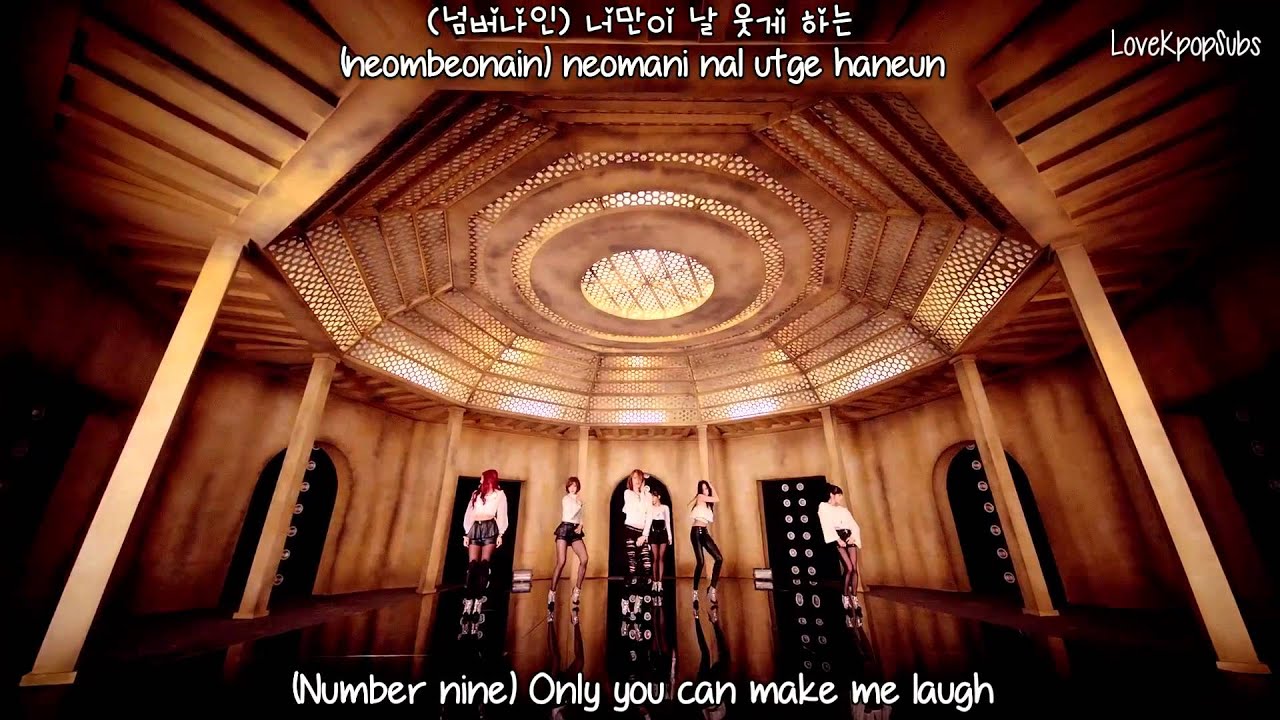
    Korean group T-Ara sing of Desire, Despair, Dependance, Deceit, Despising, Death, Addiction ... Dukkha ... No. 9 ...
    .


    Last edited by Jundo; 10-01-2026, 02:07 PM.
    ALL OF LIFE IS OUR TEMPLE

    Comment

    • Jundo
      Treeleaf Founder and Priest
      • Apr 2006
      • 45039

      #3
      This Zazenkai will also mark the changing of our Shuso Head Priests to guide this Jukai and Ankai month. We thank Shusos Shujin and Seikan for their efforts and attention this past month.

      For the coming month, our General Shuso will be Rev. Washin image.png, and our Precept Shuso will be Rev. Onki image.png. Our Rakusu sewing continues under the watchful eye of Rev. Koriki assisted by Seikan.

      It is a full time job ... not just ...
      ,


      Gassho, Jundo
      stlah
      Last edited by Jundo; 10-01-2026, 02:02 PM.
      ALL OF LIFE IS OUR TEMPLE

      Comment

      • Gar Te
        Member
        • Aug 2026
        • 26

        #4
        Most excellent. I am excited for my first monthly zazenkai. I am most curious about that Kannon stretch. I am grateful that our practice something to return to and try again daily, because I'm still trying to get my stride going. Next year maybe I can start with a bang rather than a slow acceleration over the course of weeks.

        Gassho
        -Gar
        [S:T]
        “There is something to be learned from a rainstorm. When meeting with a sudden shower, you try not to get wet and run quickly along the road. But doing such things as passing under the eaves of houses, you still get wet. When you are resolved from the beginning, you will not be perplexed, though you will still get the same soaking. This understanding extends to everything.”
        ― Tsunetomo Yamamoto​

        Comment

        • Seikan
          Novice Priest-in-Training
          • Apr 2020
          • 1434

          #5
          Originally posted by Gar Te
          Most excellent. I am excited for my first monthly zazenkai. I am most curious about that Kannon stretch. I am grateful that our practice something to return to and try again daily, because I'm still trying to get my stride going. Next year maybe I can start with a bang rather than a slow acceleration over the course of weeks.

          Gassho
          -Gar
          [S:T]
          It will be great to practice with you at the monthly Zazenkai Gar!

          Regarding the Kannon stretch . . . Please don't expect too much. It really is just that—a much-needed stretch.

          Gassho,
          Seikan
          stlah
          弘道聖簡 Kōdō Seikan
          (Vast Way Sacred Simplicity)

          Need the latest study materials for Precepts study? Visit the link below:
          2026 Ango/Jukai Precept Study Materials
          ​
          "If someone asks / about the mind of this monk, / say it is no more than / a passage of wind / in the vast sky."
          —Ryokan

          Comment

          • Gar Te
            Member
            • Aug 2026
            • 26

            #6
            Originally posted by Gar Te
            Most excellent. I am excited for my first monthly zazenkai. I am most curious about that Kannon stretch. I am grateful that our practice something to return to and try again daily, because I'm still trying to get my stride going. Next year maybe I can start with a bang rather than a slow acceleration over the course of weeks.

            Gassho
            -Gar
            [S:T]
            "Don't expect much...". Spoken like a Zen priest. Ha!

            Thank you for managing my expectations!

            -Gar
            [S:T]
            “There is something to be learned from a rainstorm. When meeting with a sudden shower, you try not to get wet and run quickly along the road. But doing such things as passing under the eaves of houses, you still get wet. When you are resolved from the beginning, you will not be perplexed, though you will still get the same soaking. This understanding extends to everything.”
            ― Tsunetomo Yamamoto​

            Comment

            • Dachi
              Member
              • Aug 2025
              • 47

              #7
              Hosting an impromptu sleep over and sleep under here tonight. Will be sitting with everyone over the weekend.

              Gassho, Dachi
              satlah

              Comment

              • Gar Te
                Member
                • Aug 2026
                • 26

                #8
                I am beyond grateful for this sanga and the opportunities it affords those who otherwise would lack it. Tonight was an excellent practice and talk. So much to smile about. Thank you all.

                -Gar
                |[S:T]|[L:A:H]|
                “There is something to be learned from a rainstorm. When meeting with a sudden shower, you try not to get wet and run quickly along the road. But doing such things as passing under the eaves of houses, you still get wet. When you are resolved from the beginning, you will not be perplexed, though you will still get the same soaking. This understanding extends to everything.”
                ― Tsunetomo Yamamoto​

                Comment

                • Ryūdō-Liúdào
                  Member
                  • Dec 2025
                  • 201

                  #9
                  Originally posted by Jundo

                  披毛戴角入廛來
                  優鉢羅花火裏開
                  煩惱海中爲雨露
                  無明山上作雲雷
                  鑊湯爐炭吹敎滅
                  劍樹刀山喝使摧
                  金銷玄關留不住
                  行於異路且輪廻
                  As a visual added note, as we can see in this talk, Tóng'ān Chángchá used a fixed line-length poetry style (gǎnyánshī / 齐言诗, literally "equal-speech poetry") to write the "Ten Talks of Unfathomable Depths" - Shí Xuán Tán (十玄談). Specifically, the 7-character style is called Gǔshī (古诗), or "Old-Style Poetry."

                  As you can see, some characters have similar, yet different meanings:
                  披 pī To drape over, wear (on the body), or be covered in
                  毛 máo Fur, hair, or feathers
                  戴 dài To wear or carry on the head (e.g., a hat, crown, or horns)
                  角 jiǎo Horns or antlers
                  入 rù To enter
                  廛 chán Market, marketplace, bazaar, or the bustling city
                  來 lái To come
                  So putting this together, we get the translation: "Growing hair and horns, you enter town," or more literally: "Wearing fur and bearing horns, entering the marketplace."​

                  披毛戴角 (pī máo dài jiǎo) is generally taken to mean: to look like a beast of burden (like an ox or a horse).
                  入廛來 (rù chán lái) is generally taken to mean coming back into a crowded town or marketplace.

                  From the way I understand it, while "wearing fur and horns" usually carries a negative karmic warning in common Buddhism, Zen masters completely flipped the meaning to describe enlightenment in action. Here, the enlightened master willingly relinquishes a "holy" or pure human appearance to mingle with the lowest realms of existence. Then the master re-enters the messy, mundane world (廛—the marketplace) looking like a beast of burden (披毛戴角). They act as a "workhorse" or a "helper ox" to pull suffering beings out of delusion, working tirelessly without any pride or ego; aka, the Bodhisattva's path.

                  ​Gasshō,
                  Ryūdō​
                  Sat/Lah ​
                  流道 - Ryūdō - Liúdào - Flowing Way

                  Comment

                  • HagiaSunyata
                    Member
                    • Feb 2026
                    • 18

                    #10
                    Been quite the busy yet studious week for me. Sadly was not able to make it to the live monthly Zazenkai today; however, will be sitting with you all on the weekend. Hope you all had a good sit!

                    Gassho,
                    Lorenzo Ruiz
                    sat/lah

                    Comment

                    • Jundo
                      Treeleaf Founder and Priest
                      • Apr 2006
                      • 45039

                      #11
                      From the way I understand it, while "wearing fur and horns" usually carries a negative karmic warning in common Buddhism, Zen masters completely flipped the meaning to describe enlightenment in action. Here, the enlightened master willingly relinquishes a "holy" or pure human appearance to mingle with the lowest realms of existence. Then the master re-enters the messy, mundane world (廛—the marketplace) looking like a beast of burden (披毛戴角). They act as a "workhorse" or a "helper ox" to pull suffering beings out of delusion, working tirelessly without any pride or ego; aka, the Bodhisattva's path.
                      Yeah, that's nice.

                      Gassho, J
                      stlah

                      PS - What do you read in this line? Is there a "completely" blow out? 滅 is "extinguish," so maybe "completely blow out" is implied.

                      鑊湯爐炭吹敎滅

                      And here ...

                      優鉢羅花火裏開
                      煩惱海中爲雨露

                      I don't see "all," although perhaps that is implied too. Rather than ...

                      All afflictions become like rain and dew in the vast sea.
                      All ignorance becomes like clouds and thunder on a mountain.

                      I read it as ...

                      Afflictions become like rain and dew in the vast sea.
                      Ignorance becomes like clouds and thunder on a mountain.​​
                      Last edited by Jundo; 10-03-2026, 09:39 AM.
                      ALL OF LIFE IS OUR TEMPLE

                      Comment

                      • Matt
                        Member
                        • Oct 2012
                        • 511

                        #12
                        Sitting this one now.

                        Matt
                        Lah

                        Comment

                        • Tenryu
                          Member
                          • Sep 2025
                          • 313

                          #13
                          Thanks, Jundo, for the talk, and Dogaku for the ino. I couldn’t make it live, but really enjoyed sitting with the recording today. And that Dolly line was a nice touch.

                          P.S. I still remember that Bat-utility belt! I grew up watching Adam West’s Batman with my dad.

                          Gasshō,
                          Tenryū
                          sat&lah

                          ​
                          恬流 - Tenryū - Calm Flow

                          Comment

                          • Jundo
                            Treeleaf Founder and Priest
                            • Apr 2006
                            • 45039

                            #14
                            Originally posted by Tenryu
                            P.S. I still remember that Bat-utility belt! I grew up watching Adam West’s Batman with my dad.

                            Holy Buddha, Batman!


                            Gassho, J
                            stlah
                            ALL OF LIFE IS OUR TEMPLE

                            Comment

                            • Ryūdō-Liúdào
                              Member
                              • Dec 2025
                              • 201

                              #15
                              Originally posted by Jundo
                              What do you read in this line? Is there a "completely" blow out? 滅 is "extinguish," so maybe "completely blow out" is implied.

                              鑊湯爐炭吹敎滅

                              And here ...

                              優鉢羅花火裏開
                              煩惱海中爲雨露

                              I don't see "all," although perhaps that is implied too. Rather than ...

                              All afflictions become like rain and dew in the vast sea.
                              All ignorance becomes like clouds and thunder on a mountain.

                              I read it as ...

                              Afflictions become like rain and dew in the vast sea.
                              Ignorance becomes like clouds and thunder on a mountain.​
                              All right! Let's break 'em down

                              First line: 鑊湯爐炭吹敎滅

                              鑊湯 - (Huò tāng): Large cauldrons of boiling water/oil.
                              爐炭 - (Lú tàn): Furnaces full of burning charcoal.
                              吹 - (Chuī): To blow (like a gust of wind or breath).
                              敎 - (Jiào): To cause to/to make happen (an archaic causative particle, similar to 让 or 使).
                              滅 - (Miè): Extinguished/destroyed/brought to peace.

                              Your thought on the implication of it being "completely blow out" sounds spot on. When put together, 吹 (Chuī), 敎 (Jiào), and 滅 (Miè) should mean "to blow in order to cause to be extinguished," or put more cleanly, "to be blown out and extinguished." (I double-checked with my wife to confirm, and she thinks this is correct, but she's not 100% sure as the archaic 敎 is not a word she uses hahaha).

                              The full line could easily be translated as: "The boiling cauldrons and charcoal furnaces are blown out and extinguished."

                              For those not so studied up on Buddhist literature:
                              The literal/mythological/comological meaning here is about the subduing of hell realms (Naraka), in particular, the lowest level (Avici). Avici is where the most sinful karmic debts are paid through burning and boiling; thus the cauldrons and furnaces. In the Lotus Sutra, it states that if a person facing these hellish tortures calls upon the name of Avalokiteshvara (Guanyin/Kannon), the Bodhisattva of Compassion, the fires of hell will instantly turn into a cool, refreshing pool; thus the "blown out and extinguished" part.
                              In a more practical, everyday Zen or Buddhist context, hell is often viewed as a state of mind rather than a physical place. Therefore, the boiling cauldrons and furnaces represent your own raging negative emotions, the fires of passion, specifically anger (greed/attachment, hatred, and ignorance). So, to have these fires be "blown out" represents mindfulness, wisdom, or a single thought of pure compassion. The line means that when you invoke wisdom or compassion, the burning torment of your own anger and anxiety is instantly neutralized.
                              Finally, from a philosophical perspective, this line represents the idea that no matter how heavy or terrifying your current suffering (the burning furnace) feels, it is not permanent. Because suffering is tied to your mind and perception, it can be dissolved in a single moment ("blown out") when your perspective shifts.

                              I think you may have sent the wrong lines, as the second line isn't about rain and dew, but the third one you posted is hahaha. That being said, I think you meant to add "無明山上作雲雷." But hey, since we got that second one here, let's do all 4!

                              Second line: 優鉢羅花火裏開

                              優鉢羅 - (Yōu bā luó): A phonetic Chinese transliteration of the Sanskrit word Utpala (Blue Lotus).
                              花 - (Huā): Flower/blossom.
                              火 - (Huǒ): Fire/flames.
                              裏 - (Lǐ): Inside/within/amidst.
                              開 - (Kāi): To open/to bloom.

                              The full line could easily be translated as: "The Utpala lotus blossoms in the midst of fire."

                              The literal/mythological/comological meaning here is about the impossible lotus. 優鉢羅花 means the Utpala Flower, which is a Sanskrit word for the blue lotus flower. In Buddhist symbolism, the lotus grows out of muddy water but remains completely unstained by it. The blue lotus specifically symbolizes the victory of the spirit over the senses, wisdom, and knowledge. But in this line, we have a paradox, as 火裏開 means the flower is blossoming in a fire! While a lotus growing in water is natural, a lotus blooming inside a raging fire is a physical impossibility. So, this line represents a miraculous, supernatural event. As a literary metaphor, since fire usually destroys living things, for the lotus to bloom because of or within the fire means that hardships have become the very fuel for spiritual growth. It is a metaphor for ultimate resilience, grace under pressure, and finding absolute peace in the most hostile environments.
                              From a philosophical perspective, this line represents enlightenment amid suffering (Samsara is Nirvana). "Fire" represents Samsara: the chaotic, painful, and burning cycle of everyday life, filled with desires, loss, and suffering. At the same time, this line is telling us that true spiritual awakening does not require fleeing to a quiet mountain or a sterile void. Instead, a truly awakened person is like the Utpala lotus: they can live right in the middle of the world's "fires" without being consumed or burned by them. It highlights the Mahayana ideal that Nirvana and Samsara are not two separate places. Peace is found by transforming your mind within the fire itself.​

                              Third line: 煩惱海中爲雨露

                              煩惱 (Fán nǎo): Afflictions, worries, vexations, or emotional distress (from the Sanskrit Klesha).
                              海 (Hǎi): Sea/ocean (symbolizing vastness and depth).
                              中 (Zhōng): In the middle of/within/amidst.
                              爲 (Wéi): To become/to act as.
                              雨露 (Yǔ lù): Rain and dew (traditionally symbolizing life-giving nourishment or imperial/divine favor).

                              I think the way I would read it is a little different than the example you gave. I would tie the afflictions to the ocean aspect, magnifying the depth of the Klesha: "Within the ocean of afflictions, it becomes saving rain and dew." This flows smoothly from the previous line about the lotus blooming in fire. First we had growth in great suffering; now we find peace within the great suffering.

                              The literal/mythological/comological meaning here is about quenching the ocean of afflictions/defilements/dispair. In Buddhism, Kleshas, or 烦恼 (fánnǎo) in Chinese, are the mental states that cloud the mind and cause suffering, like anxiety, greed, anger, ignorance, and jealousy. Describing them as a "sea" or "ocean" means they are vast, deep, seemingly endless, and capable of drowning a person. Meanwhile, "rain and dew" symbolize mercy, blessings, and spiritual nectar (often referred to as Amrita or sweet dew). Just as rain revives dying, withered crops, this spiritual intervention instantly cools and nourishes a parched, suffering soul. In the context of the Lotus Sutra, this line describes how Avalokiteshvara responds to the cries of sentient beings. When someone is completely submerged and helpless in their own karmic suffering ("in the ocean"), the Bodhisattva manifests as a gentle, cleansing rain to wash away the distress.
                              From a practical perspective, it's talking about cooling the mind when we feel overwhelmed by stress, grief, or overthinking. Basically, when our minds feel like stormy seas. This phrase reminds us that mindfulness, compassion, or a single moment of pure awareness is like gentle rain. It calms the waves of the mind and restores clarity.
                              From a philosophical perspective, it highlights that spiritual relief doesn't always come as a dramatic lightning bolt; it often manifests as the quiet, pervasive, and soothing presence of "dew," aka a subtle shift in perspective that brings immense peace to a troubled mind.

                              Fourth line: 無明山上作雲雷

                              無明 - (Wú míng): "No-light"/Ignorance/Delusion (the root of the 12 Links of Dependent Origination).
                              山 - (Shān): Mountain (symbolizing stubbornness, heaviness, and immense scale).
                              上 - (Shàng): On top of/upon.
                              作 - (Zuò): To act as/to become/to create.
                              雲雷 - (Yún léi): Storm clouds and thunder (symbolizing the gathering of Dharma teachings and the shocking crack of absolute truth).

                              Keeping in the same sort of form as the previous lines, I would read this one a little differently too. The mountain represents something unmoving and immense, so like the depths of the sea, I think it's not about ignorance touching the mountain but that the ignorance is as great as a mountain. Once again, the implication that our practice saves us from great suffering is not directly stated, but shown in a poetic, artistic image: "Upon the mountain of ignorance, acting as storm clouds and thunder."

                              The literal/mythological/comological meaning here is about the "awakeners of the world." In Buddhism, Avidya, or 無明 (wúmíng) in Chinese, is "fundamental ignorance," aka the root cause of all human delusion, ego, and suffering. Describing ignorance as a "mountain" means it is massive, rigid, incredibly heavy, and difficult to move or flatten. It is the towering wall of ego that blocks the light of our true nature. Tied to the rain and dew mentioned in the previous line, gathering clouds form, which bring that very life-giving rain, while thunder shakes the earth. In Zen, thunder symbolizes the "Lion's Roar," the uncompromising, shocking statement of truth from an enlightened teacher that startles the student out of their spiritual sleep.
                              From a philosophical perspective, a person trapped in ignorance is like someone deeply asleep in a dark room. Gentle words sometimes aren't enough to wake them. The Zen practitioner or Bodhisattva must scale the "mountain of ignorance" and intentionally strike like a sudden thunderstorm (雲雷). The loud crack of thunder breaks the illusion of the ego and forces the mind to snap back into the present moment. Notice the verb 作 (Zuò)? It's telling us that this isn't a passive line. It means an advanced practitioner does not run away from people's ignorance; they actively go right into the heaviest density of delusion to shake people awake.

                              As an added note, when looking at these lines together, we can notice that they form a perfect guide to the Mahayana Bodhisattva path in a triptych of fire, water, and thunder.
                              Firstly, the practitioner develops absolute inner peace and resilience, blooming like a cool lotus in the fires of worldly suffering.
                              Secondly, they use gentle, nurturing compassion (rain and dew) to comfort those drowning in deep emotional distress and anxiety.
                              Thirdly, they use fierce, piercing wisdom (thunder) to shock people out of their blind patterns, complacency, and spiritual ignorance.

                              And I think that's my official homework for the day done!

                              ​Gasshō,
                              Ryūdō​
                              Sat/Lah ​
                              流道 - Ryūdō - Liúdào - Flowing Way

                              Comment

                              Working...