The "Disabled/Differently-Abled" Ancestors Recitation

Collapse
X
 
  • Time
  • Show
Clear All
new posts
  • Jundo
    Treeleaf Founder and Priest
    • Apr 2006
    • 44331

    The "Disabled/Differently-Abled" Ancestors Recitation

    UPDATE: Based on discussion of impacted peoples' varied feelings about terms, and current consensus and varied viewpoints among persons with disabilities, we have changed to title of our Ceremony to the "Disabled/Differently-Abled" Ancestors Recitation.

    A few years ago, our Treeleaf Sangha developed a recitation for our "Disabled/Differently-Abled" Ancestors, those in centuries past who practiced with obstacles, or for whom doors were closed, due to physical and mental disabilities. We searched the histories and found the names of several representative persons, although there are surely countless more whose names are unknown because hidden to history. It is now a part of our annual "Rohatsu" Retreat each December.

    We are hoping that other Zen and Buddhist Sangha will consider to adapt this ceremony as part of their own Ancestor recitations, much as we now often recite for our Women Ancestors and, in our Sangha, our "Same, yet Diverse" Ancestors of many identities who often met difficulty and misunderstandings in the past for who they where. So far, it seems that Treeleaf remains unique in this regard.

    We just created a new video demonstrating and explaining the recitation. The ceremony begins at the 4 minute mark, and is followed by "Reclining Zazen," where we ask all our Sangha members, abled and not, to sit or recline Zazen together in support of those who must. There are subtitles on Youtube for those who need.
    .
    .

    .

    This is part of our Monastery of Open Doors program at Treeleaf, opening opportunities for Ordination and Priest Training to many who, due to health or other major life obstacles, find the normal paths to Ordination barred. (https://www.opendoorsmonastery.org/)
    .
    Gassho, Jundo
    stlah
    Last edited by Jundo; 03-11-2026, 12:13 AM.
    ALL OF LIFE IS OUR TEMPLE
  • Onki
    Novice Priest-in-Training
    • Dec 2020
    • 1292

    #2
    Thank you for this, Jundo

    Gasshō,

    On
    “Let me respectfully remind you
    Life and death are of supreme importance.
    Time swiftly passes by
    And opportunity ist lost.
    Each of us should strive to awaken.
    Awaken, take heed,
    Do not squander your life.​“ - Life and Death and The Great Matter

    Comment

    • Jundo
      Treeleaf Founder and Priest
      • Apr 2006
      • 44331

      #3
      Originally posted by Onki
      Thank you for this, Jundo

      Gasshō,

      On
      By the way, I received some push-back recently from someone on the name "differently-abled," rather than "disabled ancestors." They said that the consensus of the disabled community now is that "differently-abled" is "ableist," and discriminatory in implying that disability was not disabling.

      I again looked into this, and found such opinions professed very strongly by some disabled individuals and groups, especially in the US, and some in UK.

      But I also explained that, when we first developed the ceremony and "Disabled Ancestors Lineage" some years ago, we researched this, and found many in the disabled community who seem to hold the opposite opinion! It seems actually that there is not solid agreement on this, and passionate voices on all sides.

      The London Paralympics in 2012 helped change the way people think about disability and sport. A new exhibition reveals the history and continuing evolution of para sport and how it is received.


      vs.

      Terms like “differently abled” do more harm than good. Here’s why you shouldn’t use them, and what to say instead.


      Also, this was developed by our disabled members at the time, including our priests, and it was decided by consensus that "differently abled" was the better way to go.

      Any feelings on this? For the future, need we change the name of the ceremony?

      Gassho, Jundo
      stlah
      ALL OF LIFE IS OUR TEMPLE

      Comment

      • Seido-nigo
        Member
        • Dec 2025
        • 44

        #4

        Jundo,

        I can only speak from my own experience and must start by acknowledging that people's experience of disability, even within the same "condition", differs vastly. We each have our own journey to walk in this.

        I also feel the term "differently-abled" is dated and would welcome a discussion about this with others who identify as having a disability in the sangha. There are likely good reasons why "differently-abled" was appropriate at the time, such as our right to agency, our desire to still be seen as capable, though we may go about things differently, and the hope that this would be less stigmatizing than the word "disabled", which has negative connotations of helplessness and dependency.

        From my perspective, the problem with using "differently-abled" is that it side-steps the reality of living with disability, how disability does indeed mean we are at times (or maybe even all the time!) dependent on others, on help, on adjustments to meet the demands of normative society. There is no shame in this. "Differently-abled" feels a bit like spiritual bypassing, in avoiding the discomfort of confronting what the true problem at hand is. The problem is not reframing our disabilities as superpowers or different abilities in order to be seen as worthy, as an equal human being. The real problem is that even if you are helpless or dependent (as we will all be, whether disabled or not, when we approach the universal point of death) you still have basic human rights to respect, dignity, agency and a meaningful life. You have the right to help to achieve and protect these things. You do not need to earn these rights by being "able" in any form.

        My own journey unpacking my internalised ableism, learning skilful ways of addressing ableism and discrimination in all its forms, is very much still ongoing. But I would be for using the language of disability as it is, rather than dressing it in something partial to make it more palatable. Equally, everyone has the right to use the language that feels most congruent to their experience. Perhaps a collective choice by the sangha, one that is "living", open to evolving alongside the lived experience of Disabled communities?


        Gassho
        Seido
        Satlah

        Comment

        • Bion
          Senior Priest-in-Training
          • Aug 2020
          • 6997

          #5
          Thanks, Seido, for speaking your mind. I’ve spent some time reflecting on this today after reading your reply.

          I don’t belong to the group represented by this language, so I don’t feel it’s my place to lean strongly in one direction or another. I trust that others—particularly those directly affected by this language—have a deeper understanding of it and greater wisdom to speak on it.

          What I do feel is crucial—especially in a Buddhist sangha—in this situation or any other, is that our language aligns with the Eightfold Path and, by extension, the precepts. For me, that means it should be compassionate and respectful, truthful, and not lead to more attachment, clinging, or delusion.​ So, more than aligning with any socially acceptable norm, it should align with the Dharma first and foremost. That's as much as I can say on this topic.

          Gassho
          sat lah
          "One uninvolved has nothing embraced or rejected, has sloughed off every view right here - every one."

          Comment

          • Onki
            Novice Priest-in-Training
            • Dec 2020
            • 1292

            #6
            I took some time to reflect on this before I responded.

            I had no idea how outdated the term “differently abled” is. As a disabled person myself, I feel quite silly for not knowing this. I’ve been using the term differently abled for some time now and honestly thought it was what disabled folks wanted to be called.

            I think the word disabled has negative connotations for sure. I think people that aren’t disabled do have good intentions and don’t realize this term isn’t appropriate. We have been told by society that the word disabled means lower than; less than. “You can’t do this because you’re disabled.”Only recently have disabled folks been represented in the media.

            For me, using the word disabled to describe myself makes me uncomfortable. I still haven’t really come to terms with being, acknowledging and accepting being disabled. I get embarrassed any time I need to use my mobility aids. I’m working on this.

            All of us have different experiences with being disabled. Some need more help and support than others.

            We are not less than.

            Gasshō,

            On

            Sat/lah


            “Let me respectfully remind you
            Life and death are of supreme importance.
            Time swiftly passes by
            And opportunity ist lost.
            Each of us should strive to awaken.
            Awaken, take heed,
            Do not squander your life.​“ - Life and Death and The Great Matter

            Comment

            • Seido-nigo
              Member
              • Dec 2025
              • 44

              #7
              Originally posted by Bion
              Thanks, Seido, for speaking your mind. I’ve spent some time reflecting on this today after reading your reply.

              I don’t belong to the group represented by this language, so I don’t feel it’s my place to lean strongly in one direction or another. I trust that others—particularly those directly affected by this language—have a deeper understanding of it and greater wisdom to speak on it.

              What I do feel is crucial—especially in a Buddhist sangha—in this situation or any other, is that our language aligns with the Eightfold Path and, by extension, the precepts. For me, that means it should be compassionate and respectful, truthful, and not lead to more attachment, clinging, or delusion. So, more than aligning with any socially acceptable norm, it should align with the Dharma first and foremost. That's as much as I can say on this topic.

              Gassho
              sat lah
              Bion, thank you for your thoughts and I agree with this completely. To be clear, my words of “open to evolving alongside the lived experience of Disabled communities” were not meant to indicate that we should be led by social norms of correctness. It was twofold:
              - In part an acknowledgement that ours is a living tradition, informed by the Dharma but also shaped by the collective human experience, a living tradition that grows as humanity grows
              - In part as an explanation of why “differently-abled” has declined in used i.e. that since the time of developing the recitation, some disabled people have found limitations to the language used and have found new ways of speaking truth to power about their experiences and their right to agency.

              I know the attachment, clinging and delusion you speak of. Identity politics can be highly destructive and incapable of discourse or compassion. However, I believe that destructive tendency comes from repetitive trauma through multiple systems of oppression. And while some points are indeed delusions only, others stray very far but come from a point of truth that has been repeatedly denied, which is what causes the straying and strong clinging in the first place.

              I sincerely hope I have not offended or hurt anyone by my views, which are not meant as a criticism of anyone or any practice, but only as a reflection of my own evolution in approach to this. I claim no “correctness” and have only my own experience upon which to back this. If anyone does feel any insult with my words, I sincerely apologise and I will happily right that wrong as best I can.

              Bion, I also hope you and others will share thoughts! My point about a discussion with others who identify as disabled was not meant to create a schism between those who identify and those who do not, only that I am acutely aware, I’m the only one who has said anything and I have no right to speak for others in the sangha with whom I might “share a label” but that is literally it, just a label…and yet, language matters….​....I somewhat regret opening my mouth...should have taken Shokai's Right Speech post as a sign from the universe this morning...

              Gassho
              Seido
              satlah

              Comment

              • Bion
                Senior Priest-in-Training
                • Aug 2020
                • 6997

                #8
                Originally posted by Seido-nigo

                Bion, thank you for your thoughts and I agree with this completely. To be clear, my words of “open to evolving alongside the lived experience of Disabled communities” were not meant to indicate that we should be led by social norms of correctness. It was twofold:
                - In part an acknowledgement that ours is a living tradition, informed by the Dharma but also shaped by the collective human experience, a living tradition that grows as humanity grows
                - In part as an explanation of why “differently-abled” has declined in used i.e. that since the time of developing the recitation, some disabled people have found limitations to the language used and have found new ways of speaking truth to power about their experiences and their right to agency.

                I know the attachment, clinging and delusion you speak of. Identity politics can be highly destructive and incapable of discourse or compassion. However, I believe that destructive tendency comes from repetitive trauma through multiple systems of oppression. And while some points are indeed delusions only, others stray very far but come from a point of truth that has been repeatedly denied, which is what causes the straying and strong clinging in the first place.

                I sincerely hope I have not offended or hurt anyone by my views, which are not meant as a criticism of anyone or any practice, but only as a reflection of my own evolution in approach to this. I claim no “correctness” and have only my own experience upon which to back this. If anyone does feel any insult with my words, I sincerely apologise and I will happily right that wrong as best I can.

                Bion, I also hope you and others will share thoughts! My point about a discussion with others who identify as disabled was not meant to create a schism between those who identify and those who do not, only that I am acutely aware, I’m the only one who has said anything and I have no right to speak for others in the sangha with whom I might “share a label” but that is literally it, just a label…and yet, language matters….....I somewhat regret opening my mouth...should have taken Shokai's Right Speech post as a sign from the universe this morning...

                Gassho
                Seido
                satlah
                Do not misinterpret my words, Seido! There was nothing in my reply directed at what you said. The only reason your name appeared in my response was as a sincere thank you for stepping up and breaking the ice in this discussion, and pushing me to respond too. That is all

                Gassho
                sat lah
                "One uninvolved has nothing embraced or rejected, has sloughed off every view right here - every one."

                Comment

                • Onkai
                  Dharma Transmitted Priest
                  • Aug 2015
                  • 3673

                  #9
                  I have a mental health condition, a disability, but I think that leads me to lean on my strengths and compensate. As a result, I feel better with "differently-abled."

                  Gassho, Onkai
                  美道 Bidou (Beautiful Way)
                  恩海 Onkai (Merciful/Kind Ocean)
                  She/her
                  I will always have a lot to learn

                  Comment

                  • Seido-nigo
                    Member
                    • Dec 2025
                    • 44

                    #10
                    Originally posted by Onki
                    I took some time to reflect on this before I responded.

                    I had no idea how outdated the term “differently abled” is. As a disabled person myself, I feel quite silly for not knowing this. I’ve been using the term differently abled for some time now and honestly thought it was what disabled folks wanted to be called.

                    I think the word disabled has negative connotations for sure. I think people that aren’t disabled do have good intentions and don’t realize this term isn’t appropriate. We have been told by society that the word disabled means lower than; less than. “You can’t do this because you’re disabled.”Only recently have disabled folks been represented in the media.

                    For me, using the word disabled to describe myself makes me uncomfortable. I still haven’t really come to terms with being, acknowledging and accepting being disabled. I get embarrassed any time I need to use my mobility aids. I’m working on this.

                    All of us have different experiences with being disabled. Some need more help and support than others.

                    We are not less than.

                    Gasshō,

                    On

                    Sat/lah


                    If it is any consolation, I can't think of a single person, myself included, who hasn't felt silly on this journey and I think we continue to have moments of feeling silly no matter how far along we walk. It is truly a winding path and we all go at our own pace and that pace is perfectly alright, no matter what the tempo.

                    Agreed. We are not less than. Nothing about us without us.

                    Gassho
                    Seido

                    Comment

                    • Kotei
                      Dharma Transmitted Priest
                      • Mar 2015
                      • 5134

                      #11
                      Hello,
                      by no means should my voice be misunderstood as a vote for using a certain term.

                      I have read a discussion recently, where the terms "differently abled" and "handicapped" and "special needs" were considered outdated and considered sounding awkward or euphemistic to a lot of folks.
                      I can understand that.

                      When it comes to the today more commonly used term "Disabled people", it was considered emphasizing that disability is part of identity, maybe reflecting the socially created barriers?
                      I kind of like the rendering of it as "People with disabilities" instead of "Disabled people" that was suggested.
                      Putting the person before the condition. That seems to be used in some professional settings?

                      Happy to follow whatever our folks with disabilities decide.
                      Gassho,
                      Kotei sat/lah today.


                      義道 冴庭 / Gidō Kotei.

                      Comment

                      • Onki
                        Novice Priest-in-Training
                        • Dec 2020
                        • 1292

                        #12
                        Originally posted by Seido-nigo

                        If it is any consolation, I can't think of a single person, myself included, who hasn't felt silly on this journey and I think we continue to have moments of feeling silly no matter how far along we walk. It is truly a winding path and we all go at our own pace and that pace is perfectly alright, no matter what the tempo.

                        Agreed. We are not less than. Nothing about us without us.

                        Gassho
                        Seido
                        This is my own opinion. I am not discounting anyone, nor do I want those reading to feel I have come off that way.

                        You have given me something to think about, Seido.

                        Before this conversation, I would most likely continue using the term “differently abled,” completely unaware of its almost condescending manner to disabled people.

                        Language does matter. It always has and it always will. I do believe people put positive spins on things and subjects in order to mask the realities of them-disabled people included. Folks that aren’t disabled themselves may feel uncomfortable around disabled people. I think this has a lot to do with stigmas that being disabled is bad.

                        As I mentioned in my previous post, I do feel that generally, people without lived experience don’t want or mean to offend. They most likely don’t know and/or don’t understand about this outdated term. This is where education comes in.

                        As a physically and mentally disabled person, I see and know how inaccessible this world is. Navigation is exhausting. Keeping track of places that are indeed accessible is a job inandofitself. And I’m not speaking solely of physical disabilities. Those of us with mental disabilities are fully aware when things could be made accessible for us but aren’t. Things are meant and created for those that aren’t disabled. And when they are, it’s sometimes an afterthought.

                        I think the point I’m trying to make is that we live in a world that when you hear the word “disabled” it means less than, broken, and not “normal.” Disabled folks have been around but not really seen and are often overlooked.

                        I really think that education is key here. When people use inappropriate terms, let them know. More often than not, folks will walk away with a greater understanding knowing what is appropriate and what isn’t.

                        Gasshō,

                        On

                        sat/lah
                        “Let me respectfully remind you
                        Life and death are of supreme importance.
                        Time swiftly passes by
                        And opportunity ist lost.
                        Each of us should strive to awaken.
                        Awaken, take heed,
                        Do not squander your life.​“ - Life and Death and The Great Matter

                        Comment

                        • Jundo
                          Treeleaf Founder and Priest
                          • Apr 2006
                          • 44331

                          #13
                          Words are words, yet words are important.

                          Perhaps we might thread the needle here, recognizing the intended good meanings and possibly bad meanings of each term, and that different people have their own feelings here, with, for example ...

                          Disabled/Differently-Abled Ancestors

                          I made a new opening title, and then please listen to the start of Kokuu's explanation of the Ceremony in the first seconds.


                          Would that work?

                          We might also amend our Ancestors Chart for the future ...

                          image.png

                          Gassho, Jundo
                          stlah
                          Last edited by Jundo; 03-10-2026, 03:57 PM.
                          ALL OF LIFE IS OUR TEMPLE

                          Comment

                          • Jundo
                            Treeleaf Founder and Priest
                            • Apr 2006
                            • 44331

                            #14
                            Two folks wrote me to inquire about the need for such ceremonies of recognition, especially as we are all the same in a Buddha's Eye, and all differences drop away. Likewise for the need for groups where "disabled/differently-abled," LGBTQ+, "people of color" and others can gather to share experiences and special issues in Zen Buddhist practice and life effecting those groups. Aren't we making distinctions?

                            I responded with an explanation focused on history, as well as, sadly, continuing discrimination impacting certain groups and individuals in Buddhism today.

                            It is true that there is no self, yet there is. We are all empty, yet all distinct.

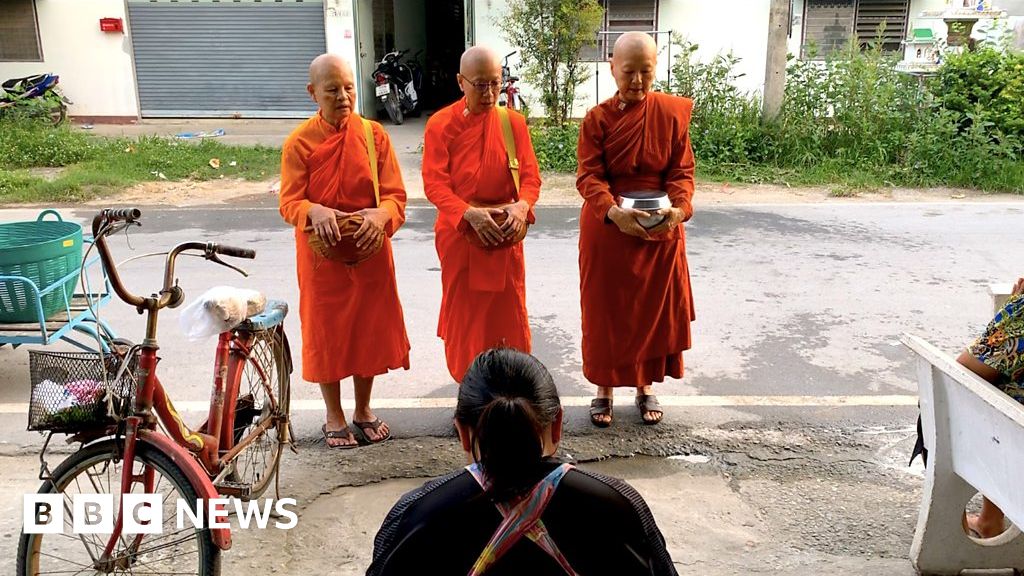
                            There have been distinctions made and acts of discrimination throughout the history of Buddhism, since its earliest days: It is the reason that women in many traditional temples still now take a back seat (literally) to men, were/are not recognized as teachers many places, and why almost no female Ordained Sangha exists even today in Thailand ...

                            Women aren't allowed to be ordained as monks in Thailand - but that didn't stop these women


                            ... and Tibetan nunneries are underfunded or impoverished, with nuns often denied basic education in Buddhism or at all, and the problem even continues in the west ...

                            Western lay Buddhists are often appalled when they hear about the discrimination Buddhist nuns face around the world. When they’re told, for instance, that nuns in Ladakh, India, don’t receive the same support to study that monks do, they happily sign up to sponsor nuns to empower them. But what is the situation of nuns in our own Western countries? Far from being supported, in fact, they have been largely overlooked, and they are often exploited.
                            https://tricycle.org/magazine/tibeta...ern-monastics/
                            ... and women in Soto Zen were not allowed to be teachers, or to have monasteries, until the late 20th century. This is the reason all the traditional ancestors are men. The disabled faced like closed doors.

                            There were many grievances among Zen nuns at the dawn of the 20th century. Under the rules of the Soto tradition women were required to wear only the black robes of novices; they had no access to any teaching, secular or monastic; they could not lead a temple nor participate in decision making concerning their tradition; and their training as nuns was much longer than that of their male counterparts, sometimes three years longer.

                            https://www.izauk.org/multimedia-arc...-20th-century/
                            Soto Zen has also recognized other forms of discrimination which the institution engaged in in Japan in past centuries ... the following against a traditional caste of social "untouchables" in Japan, the "Burakumin" ...

                            ... the Sōtō Zen school has become embroiled in controversies over traditional institutional practices that foster prejudicial attitudes and social discrimination. In response to public denunciations by the Buraku Liberation League, the Sōtō school founded a Human Rights Division charged with eliminating discriminatory practices and reforming Sōtō public image. Evidence of discriminatory language, necrologies, posthumous names, talismans, and ritual practices within Sōtō has been publicized and steps taken to eliminate them. ...

                            https://nirc.nanzan-u.ac.jp/journal/...52/article/915
                            Likewise, the "disabled/differently-abled" and other groups have experienced many obstacles and derision in both Buddhism and the wider society.

                            When disabilities are mentioned in Buddhist texts, they are portrayed as the negative results of past karmic action and as obstacles to spiritual practice. This may be because disabilities are often accompanied by great amounts of physical or emotional pain, and Buddhists hold that pain results from past negåtive âctions. Buddhist texts also emphasize the limited access people with intellectual disabilities and sensory impairments hâve to Buddhist teachings


                            and
                            https://www.independentliving.org/fi...iles201311.pdf
                            We must recognize that Buddhism, even if speaking about "equality" or "sameness" on one level, was always part of traditional societies in Asia, and Confucian and other traditional values made it a "man's world" suited to the able-bodied, and thought something wrong with many people who are different from the accepted mainstream. It was natural that the values of the surrounding society would impact the structures of Buddhists institutions because its leaders and teachers came from such society.

                            But now we have new values, new ways of appreciating differences, and a chance to remove obstacles that existed for centuries, sometimes for thousands of years. That is why we make this effort at recognition.

                            Are we now making "difference," or simply recognizing the differences and closed doors existed in the past, while now opening those doors?

                            Gassho, Jundo
                            stlah
                            Last edited by Jundo; 03-11-2026, 01:10 AM.
                            ALL OF LIFE IS OUR TEMPLE

                            Comment

                            • Seiko
                              Novice Priest-in-Training
                              • Jul 2020
                              • 1761

                              #15
                              I have read everyone's opinions carefully. I may be alone in my views. I mean no offence, but I must say that I am very straightforward on the topic of disability. I speak purely from my personal standpoint.

                              I have 4 medical reasons for being classed as disabled. And disabled people are some of the most outspoken and militant sub-groups in western society today. I keep a sense of humour and with close family I refer to myself as "wonky" rather than sick or disabled. It is satirical. Supermarkets here sell wonky vegetables. They are perfectly good, but rejected by some retailers/shoppers. This is the experience of disabled people like me, whilst perfectly capable, we still may be rejected or dismissed by some folks.

                              So, because of this, I don't care for the labelling. Whether it be health, race, sexuality or whatever. The labelling draws attention to the negatives - the disability, the fact one may be in a minority who are disadvantaged by the attitudes of the majority of society. But everyone has something to offer regardless of any of these characteristics.

                              So my own way, is to use terms that are fully inclusive, like "all", "everyone", "all people", "all ancestors". For me, that is enough.

                              I understand why others may not share this view and I am not in need of a explanation or justification. As always, I am happy to go with the majority view. As Bernie Glassman used to say, "It’s just opinions, man."

                              Gasshō, Seiko, stlah
                              Gandō Seiko
                              頑道清光
                              (Stubborn Way of Pure Light)

                              My street name is 'Al'.

                              Any words I write here are merely the thoughts of an apprentice priest, just my opinions, that's all.

                              Comment

                              Working...